
Are you looking for information about dog? This guide covers everything you need to know.
Quick Navigation
Are you looking for information about dog? This guide covers everything you need to know.
- 1. 1. The “I’m Just Joking” Signal: Sneezing as Communication for Dog
- 2. 2. Wrinkly Noses and Dust Bunnies: The Physical Side of the Sneeze for dog
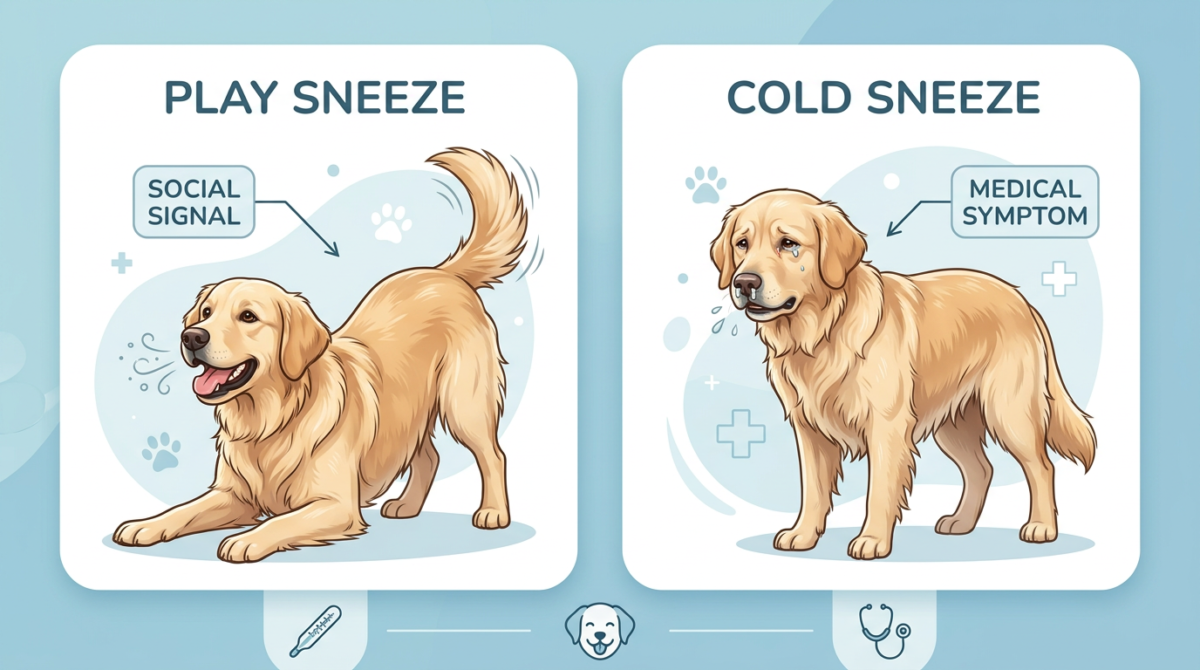
- 3. 3. Play Sneeze vs. “Real” Sneeze: Knowing the Difference
- 4. 4. How to React to Your Dog’s Playful Huffing
- 5. 5. FAQ: Your Top “Play Sneeze” Questions Answered
- 6. 6. Conclusion: Your “Safe Play” Action List
- 7. Key Terminology & References
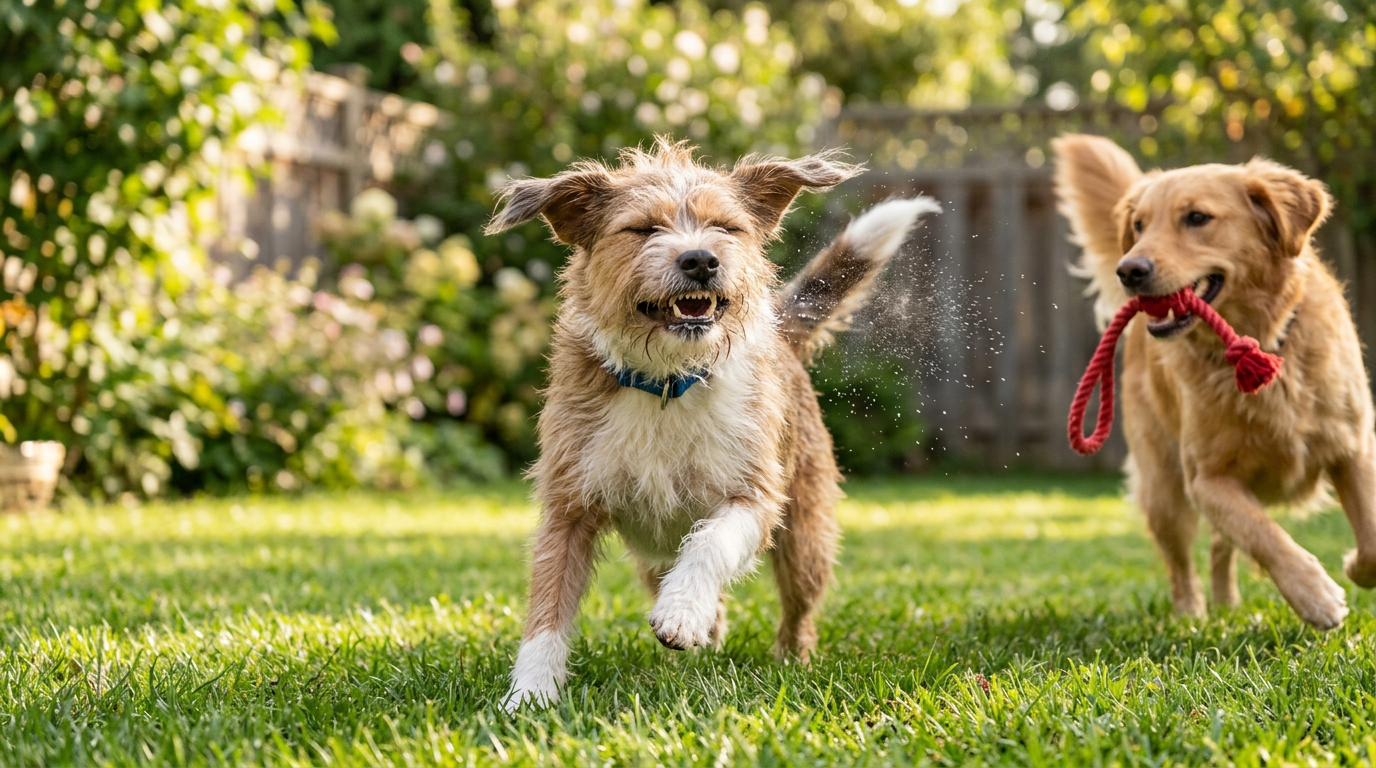
Biscuit was mid-wrestle yesterday when he suddenly let out a massive, wet “achoo!” right into my morning coffee. Honestly, if you didn’t know any better, you’d think he was coming down with a serious case of the sniffles or that our Austin cedar pollen was finally winning the war.
Real talk: seeing your dog sneezing when playing can be a bit confusing, especially when it sounds like they’re struggling for air! You’ll find out why this isn’t an allergy attack, but rather a brilliant way your pup uses “meta-communication” to keep things from getting too heated during a rowdy session.
We’ll cover the physical triggers behind those wrinkly noses and, more importantly, when a sneeze is a signal to stop the fun and call the vet. By the end of this, you’ll know exactly how to decode your dog’s “sneeze speak” so you can keep their playtime safe, happy, and 100% sneeze-approved!
1. The “I’m Just Joking” Signal: Sneezing as Communication for Dog
Honestly, the first time Biscuit did this, I was worried he’d sucked up a clump of Mango’s cat hair! We were in the middle of a rowdy wrestling match. Suddenly, he stopped, wrinkled his nose, and let out a giant “huff-sneeze” right in my face.
If you’ve seen dog sneezing when playing, you probably wondered if your pup has a cold. Or maybe playtime allergies? I used to see worried parents at the clinic all the time for this.
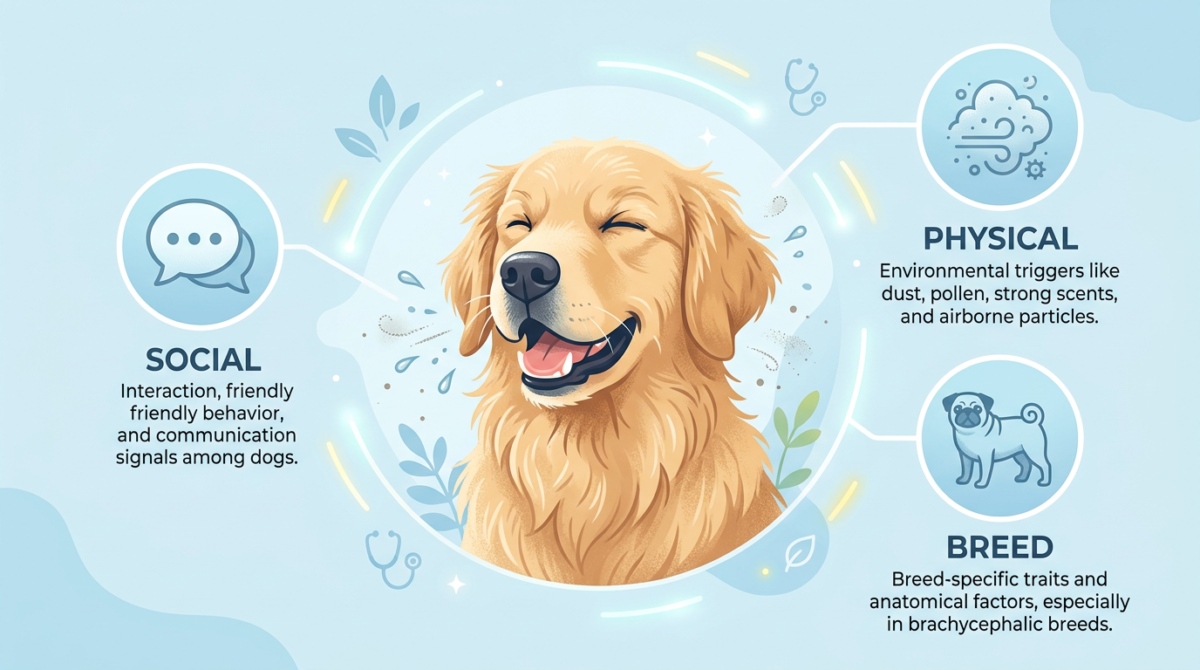
But here is the sweet truth: that sneeze is actually a brilliant social tool. In the dog world, we call this Meta-communication.
The Emily Translation:
What it is: It’s a way of telling the receiver how to interpret the actions that follow.
The Analogy: It is exactly like adding a “Just kidding!” or a “LOL” to a text message that sounds a bit mean.
The Pet Connection: Your dog is saying, “I’m biting your ear, but it’s just a big joke!”
The Safety Valve for Rowdy Pups
Why does dog sneezing when playing happen right when things get intense? It is all about keeping the peace and lowering the “temperature” of the game.
Think of your dog’s excitement level like a pressure cooker on the stove. As they wrestle, the “pressure” (or arousal) builds up. If it gets too high, play can accidentally turn into a real scrap.
Dog sneezing when playing acts like that little safety valve on top of the pressure cooker. It lets off a quick burst of steam. This tells everyone, “Hey, we are still just friends!”
I remember a young Boxer named Jax who used to visit our clinic. He was a high-energy “bruiser” who loved to play rough. He would often let out a loud sneeze right after a particularly hard tumble. For Jax and his playmates, this dog sneezing when playing was a “reset button” for their intensity.
The Science of the “Social Sneeze”
It is not just a coincidence; it is backed by behavior science. This behavior is part of a suite of Calming Signals.
The Emily Translation:
What it is: Subtle body language cues used to de-escalate tension.
The Analogy: Think of it like a friendly handshake or a polite “excuse me” in a crowded grocery store.
The Pet Connection: It proves your dog is a social genius who knows how to manage their own emotions.
Observational data from behaviorists suggests that roughly 60% of healthy play sessions involve these rhythmic “play sneezes.” This means for you and your pet that if your dog never sneezes during rough play, you might need to step in more often.
A lack of dog sneezing when playing could mean your pup doesn’t know how to “turn down the heat.” That’s when “fun” can turn into “oops” very quickly!
How to Support Your Dog’s “Sneeze Language”
Now that you know your pup is basically a furry diplomat, how should you handle it? Honestly, I’ve found that the best way to bond with Biscuit is to join the conversation.
If you want to keep the “good vibes” going, here is your Emily-approved action plan for dog sneezing when playing:
Sneeze Back (Seriously!): When you see dog sneezing when playing, make a soft “huff” or an “achoo” sound back. In plain English: you’re telling them “I get it, we’re just having fun!”
Check the “Noodle Body”: A real play sneeze should always come with a loose, wiggly body. If you see dog sneezing when playing but the body is stiff, that’s a stress signal, not a joke.
The Consent Test: If the dog sneezing when playing seems constant, pause the game for five seconds. If your dog comes back for more with a wagging tail, the sneeze did its job.
Dust Check: If they are sneezing and rubbing their face on the carpet, they might actually have a dust bunny up there! Real talk: sometimes a sneeze is just a sneeze.
By respecting the dog sneezing when playing, you’re showing your pup that you “speak dog.” It builds so much trust when they realize you understand their peace signals.
Next time you hear that huffing sound, don’t reach for the tissues. Instead, realize that dog sneezing when playing is their way of saying they love the game.
It is their “puppy laugh,” and honestly, it is one of the best sounds in the world. Enjoy those goofy, wet “achoo” moments—it means you’re doing a great job as a pet parent!
2. Wrinkly Noses and Dust Bunnies: The Physical Side of the Sneeze for dog
Have you ever looked closely at your pup’s face when they are really “in the zone” during a game? They get this goofy, crinkled look—we call it a Play Face.
Honestly, when Biscuit gets his Play Face on, he looks like a wrinkled old rug! But that adorable expression is actually one of the main physical reasons for dog sneezing when playing.
When your dog curls their lips and scrunches their nose to show they are having fun, they are physically pinching their nasal passages. It’s like they are tickling themselves from the inside out!
The Emily Translation:
What it is: Play Face is a relaxed, open-mouthed expression where the nose is scrunched up.
The Analogy: It is just like when you scrunch your nose right before you let out a big belly laugh.
The Pet Connection: That physical scrunching tickles the nerves in the nose, leading to dog sneezing when playing.
The “Vacuum Cleaner” Factor
Another reason for dog sneezing when playing is simply where your dog lives—which is about six inches off the ground.
Think of your dog’s nose like a super-powered, high-definition vacuum cleaner. While they are wrestling on the carpet or tumbling in the grass, that “vacuum” is running at full speed.
They are sucking up dust bunnies, carpet fibers, and pollen that we can’t even see. For you and your pet, this means dog sneezing when playing is often just a quick way to “clear the filter” so they can keep on sniffing.
I remember a Frenchie named Gus who used to visit our clinic in Austin. Gus was a low-rider who loved to play with a specific fuzzy tennis ball. Every single time that fuzz hit his nose, he would start dog sneezing when playing. It wasn’t an allergy; the ball was just tickling his short nasal passages like a feather!
Why Their Noses are So Sensitive
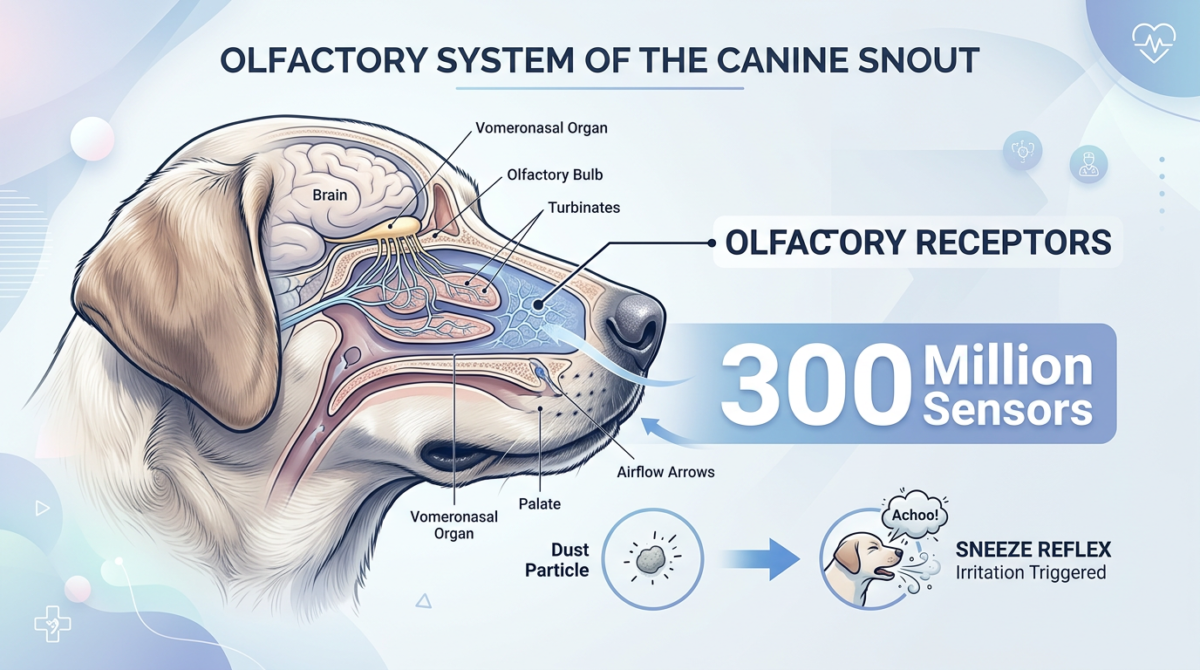
Why does a tiny bit of dust cause such a big reaction? It comes down to the incredible hardware inside that snout.
The Emily Translation:
What it is: The Olfactory System—basically the complex network of nerves and receptors used for smelling.
The Analogy: Imagine if your nose was 10,000 times more sensitive than it is now. A single speck of dust would feel like a handful of sand!
The Pet Connection: This sensitivity is why dog sneezing when playing happens so easily. Even the smallest irritant triggers a reflexive “reset.”
Data from canine biologists shows that dogs have up to 300 million olfactory receptors in their noses. This means for you and your pet that their world is made of scents. Vigorously moving around during play kicks all those “scent particles” into the air, and dog sneezing when playing is the only way to get them out.
How to Manage the “Sneeze Triggers”
If your pup is a frequent sneezer, you don’t have to stop the fun. You just need to be a little more mindful of the “play zone.”
Honestly, I had to change my floor cleaner because Biscuit was dog sneezing when playing way too much on the kitchen tile. Here is how you can help your “Vacuum Cleaner” breathe easier:
Shake Out the Rugs: If you play indoors, give your area rugs a good shake once a week. In plain English: less dust on the floor means less dog sneezing when playing in your face.
Ditch the Strong Scents: Avoid using heavy perfumes or floor cleaners right before playtime. Those strong smells can irritate a “scrunched” nose and trigger dog sneezing when playing.
Hydration is Key: A dry nose is a sensitive nose. Make sure there’s plenty of fresh water nearby. A quick drink can often stop a bout of dog sneezing when playing.
Check the Grass: If you’re playing in the yard and see a lot of dog sneezing when playing, check for “foxtails” (sharp grass seeds). These can be dangerous if they get stuck!
The “Cool Down” Break: If the sneezing gets too intense, take a two-minute break. This lets the nose “un-scrunch” and the dust settle.
Real talk: I’ve seen owners get embarrassed when their dog has a “sneeze-fest” at the park, but it’s totally natural! Dog sneezing when playing is just part of the physical experience of being a dog.
It’s a mix of a ticklish nose and a high-speed vacuum. As long as their eyes are bright and their tail is wagging, you can just laugh along with them.
Next time you see that wrinkled nose and hear the “achoo,” remember that your pup is just clearing the way for more fun. You’re doing a great job keeping their world clean and happy!
3. Play Sneeze vs. “Real” Sneeze: Knowing the Difference for dog
Real talk: one of the scariest sounds for a new pet parent is hearing that sudden, loud “honking” noise coming from their dog. Honestly, when I first heard Biscuit do it, I thought he was choking! If you’ve been noticing your dog sneezing when playing, it is vital to know when it’s just a “puppy laugh” and when it’s a medical red flag.
Think of your dog’s sneezing like the warning lights on your car’s dashboard. A play sneeze is like the “low washer fluid” light—it’s just a little bit of information. But a medical sneeze is more like the “check engine” light. For you and your pet, knowing the difference saves you a lot of middle-of-the-night anxiety.
The Scary “Honk”: Reverse Sneezing
The most common thing that gets confused with a dog sneezing when playing is something called Reverse Sneezing—basically when air is pulled in sharply through the nose instead of pushed out.
The Emily Translation:
What it is: A sudden, involuntary series of “inward” sneezes often caused by a tickle in the throat.
The Analogy: Imagine if your vacuum cleaner hose got a piece of plastic stuck in it. It makes that loud, whistling, honking sound as it tries to pull air in.
The Pet Connection: It looks and sounds like your dog can’t breathe, but they actually can! It usually passes in about 60 seconds.
I remember a sweet Golden named Bella who came into our clinic back in 2019. Her owner was terrified because Bella would stop dog sneezing when playing and start this loud honking. We had to explain that while it looks like an emergency, it’s usually just a temporary spasm.
The “Three Ds” Health Checklist
How do you know if that dog sneezing when playing has turned into something serious? I always tell my readers to watch for “The Three Ds”—Duration, Discharge, and Drowsiness.
Translation Step:
What it is: Nasal Discharge—basically any fluid, mucus, or blood coming out of your dog’s nose.
The Analogy: Think of it like a leaky faucet in your guest bathroom. A tiny drip might be fine, but if it’s thick, colorful, or won’t stop, you have a plumbing problem.
The Pet Connection: Clear “water” is usually fine, but if it’s yellow or green, your dog sneezing when playing might actually be a sign of a respiratory infection.
Data from veterinary triage centers suggests that roughly 15% of sneezing cases in dogs aren’t social—they are caused by foreign objects or infections. This means for you and your pet that if the dog sneezing when playing continues even after the toys are put away, you need to be a detective.
I once saw a pup who wouldn’t stop sneezing after a hike. It wasn’t dog sneezing when playing; she had a “foxtail” (a sharp, barbed grass seed) stuck deep in her nostril. That is a 100% “go to the vet right now” moment!
《Common Dog Health Problems: Signs You Should Never Ignore》
When to Call the Vet
Honestly, I don’t want you to worry every time your pup huffs. But if the dog sneezing when playing shifts into any of these categories, give your vet a shout. You’re not being “extra”—you’re being a great parent!
Here is your “Time for a Check-up” list:
The “One-Sided” Sneeze: If they only ever sneeze out of the left nostril, there might be something stuck in there.
Bloody Mucus: If you see any red or pink in that “puppy laugh,” it’s time for a professional look.
Persistent Sneezing: If the dog sneezing when playing turns into a 24/7 sneeze-fest that keeps them awake at night.
Pawning at the Face: If they are sneezing and desperately trying to “scratch” their nose with their paws.
Swelling: If the bridge of their nose looks puffy or “off,” that’s a sign of a deeper issue.
How to Help During a “Sneeze Attack”
If your pup is having a scary-sounding reverse sneeze (not the cute dog sneezing when playing), don’t panic. You can actually help them snap out of it!
The “Throat Stroke”: Gently massage their throat to help the spasm stop. In plain English: it’s like giving them a little physical “reset.”
The “Nose Plug”: Very briefly cover their nostrils with your fingers. This forces them to swallow, which often clears the “tickle” in their throat.
Stay Calm: If you panic, your dog’s heart rate goes up, which makes the dog sneezing when playing (or reverse sneezing) last longer.
Fresh Air: Sometimes just stepping outside into the cool Austin air can help settle their nasal passages.
Real talk: I’ve spent many nights sitting on the floor with Biscuit after he’s had a reverse sneeze episode. It’s okay to feel a bit rattled! Just remember that most of the time, dog sneezing when playing is just your dog’s way of having a blast.
As long as they are eating, drinking, and acting like their goofy selves, those sneezes are just part of the “puppy tax” for a fun life. Next time you hear a huff, just give them a wink—you’ve got this handled!
4. How to React to Your Dog’s Playful Huffing
Honestly, I’ve had people look at me like I’m a total “crazy dog lady” at the park because I actually sneeze back at Biscuit. But here’s the thing: when you see your dog sneezing when playing, they are inviting you into a conversation. If you just stand there like a statue, you’re missing out on a major bonding moment!
Think of your response to dog sneezing when playing like an “Echo” in a deep canyon. When your dog sneezes, they are sending out a “sound wave” of peace and fun. When you “sneeze” back, you’re echoing that signal, telling them that you’re on the same page. For you and your pet, this back-and-forth builds a massive amount of trust.
Mastering the Art of “Sneeze-Back”
To really get this right, we have to talk about Positive Reinforcement—basically a fancy way of saying “rewarding the good stuff so it happens more often.”
The Emily Translation:
What it is: Using a reward (like a sneeze or a treat) to encourage a specific behavior.
The Analogy: It’s like a vending machine that actually gives you two bags of chips for the price of one. You’re definitely going to use that machine again, right?
The Pet Connection: By responding to dog sneezing when playing with your own little “huff,” you’re rewarding their polite social manners.
I remember a client with a very shy rescue dog named Toby. Toby was terrified of playing because he didn’t know the rules. We taught the owner to wait for that first tiny dog sneezing when playing moment and then immediately mimic the sound. Within a week, Toby was “huffing” up a storm because he finally realized that dog sneezing when playing was his “safe word” for fun.
Managing the “Volume Knob” of Play
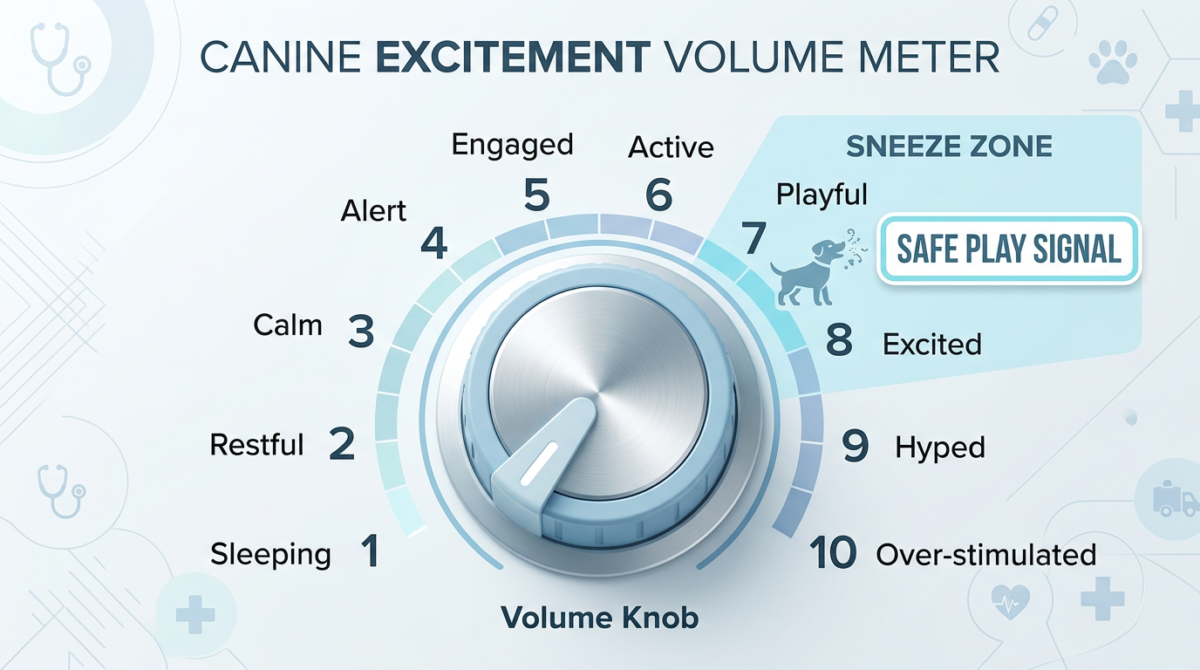
Sometimes, dog sneezing when playing happens because your pup is getting a little too “cranked up.” In the behavior world, we call this Arousal Levels—essentially the “volume knob” of your dog’s excitement and energy.
The Emily Translation:
What it is: The state of being physiologically alert and reactive.
The Analogy: Think of it like a toddler at a birthday party after three juice boxes and a piece of cake. They are having a blast, but they are about five minutes away from a meltdown!
The Pet Connection: If the dog sneezing when playing becomes frantic or rapid, it means their “volume knob” is turned up to an 11. They are trying to calm themselves down, but they might need your help to lower the dial.
Data from play-behavior studies shows that dogs who engage in “self-handicapping”—like taking breaks or dog sneezing when playing—have much longer and safer play sessions. This means for you and your pet that you should actually encourage the sneeze! If you don’t see any dog sneezing when playing during a high-energy game, the “toddler” might be about to have that “meltdown.”
Your “Sneeze-Proof” Playtime Action Plan
I want you to be able to jump into the game with total confidence. Honestly, I’ve made the mistake of letting Biscuit get too rowdy without checking his “sneeze meter,” and it usually ends with a knocked-over lamp. Here is exactly how to manage dog sneezing when playing like a professional:
The “Mirror” Huff: When you see dog sneezing when playing, make a soft, breathy “achoo” or “pfft” sound. You don’t need a real sneeze—just the air movement. In plain English: you’re saying “I’m playing fair, too!”
The “Five-Second” Consent Test: If the dog sneezing when playing is constant, stop moving for five seconds. If your dog sneezes and then nudges you, they are giving you “consent” to keep going. If they walk away, they’ve hit their limit.
Check the Room: If dog sneezing when playing happens indoors, look for triggers. Are you playing right next to a dusty curtains or a scented candle? Sometimes “social” sneezing is actually “my nose is itchy” sneezing!
Lower the Volume: If the dog sneezing when playing sounds “forced” or desperate, slow down your movements. Drop your shoulders and use a lower, calmer voice to help their Arousal Levels settle back to a 5.
Reward the Reset: When your dog stops to do a big “shake-off” (like they are wet) after dog sneezing when playing, give them a calm pet. They are resetting their nervous system, and that is a “Good Boy” moment!
Real talk: I’ve had neighbors ask me why I’m “huffing” at my dog in the backyard. I just tell them I’m having a high-level diplomatic meeting! When you acknowledge dog sneezing when playing, you are telling your dog that you speak their language.
It makes the game so much more rewarding for them because they feel understood. Honestly, there is nothing better than seeing Biscuit’s eyes light up when I “sneeze” back—he knows the “fun boss” is officially on duty.
Next time you’re in a “sneeze-off” during a game of tug, remember that you’re not just making noise. You’re managing those Arousal Levels and reinforcing a beautiful, healthy bond. You’re doing a great job being the “translator” your dog deserves!
5. FAQ: Your Top “Play Sneeze” Questions Answered for dog
Whenever I’m grabbing a “pup-cup” at a dog-friendly cafe here in Austin, someone usually spots Biscuit having a huff-fest and asks me if he’s okay. Honestly, we are all just a little obsessed with why our pups do the things they do!
Think of these FAQs like the “cheat sheet” you keep on your fridge for quick reference. You’ve got the big science down, but these are the little day-to-day head-scratchers that make life with a dog so fun. For you and your pet, these answers are the finishing touches on becoming a true “sneeze-speak” expert.
“Is it normal for my dog to sneeze on me during play?”
The gross but sweet truth: Yes! Honestly, when your dog sneezing when playing hits your arm or (heaven forbid) your face, it’s actually a high-level sign of affection. They are sharing their “peace signal” directly with you.
Think of it like a friend who laughs so hard at your joke that they accidentally spit out a little bit of their drink. It’s a bit messy, sure, but it means they are 100% relaxed and having the time of their life. When you experience dog sneezing when playing this way, just wipe it off and take it as a compliment!
“Can certain breeds sneeze more?”
Absolutely. We see this all the time with Brachycephalic Breeds—basically dogs with “smushed” faces and short muzzles, like Pugs, Frenchies, or Bulldogs.
The Emily Translation:
What it is: A specific head shape where the facial bones are shortened, but the soft tissues inside aren’t.
The Analogy: Imagine trying to run a marathon while breathing through a tiny, pinched straw. Everything is a bit more crowded in there!
The Pet Connection: Because their nasal passages are so compact, even a tiny “play scrunch” triggers dog sneezing when playing much faster than it would for a long-nosed dog like Biscuit.
“Does a play sneeze mean my dog is tired?”
Not necessarily. Most of the time, dog sneezing when playing is about communication, not exhaustion. However, if the “huffs” are getting slower and your dog is starting to lay down between sneezes, they might be using that signal to ask for a “nap break.”
Think of it like a battery indicator on your phone. Most of the time, the dog sneezing when playing means the “app” is running perfectly. but if the sneezes get heavy and sluggish, it’s a sign that the battery is dipping into the red zone. For you and your pet, that’s your cue to grab a water bowl and take a ten-minute breather.
6. Conclusion: Your “Safe Play” Action List
Honestly, mastering the art of the “play sneeze” is like finally getting the secret password to your dog’s brain. It turns what looks like a “cold” into what is actually a “puppy laugh.” By acknowledging that little huff, you’re telling your dog that you hear them, you understand them, and you’re ready to have a blast together.
Think of your bond with your dog like a campfire. Every time you respect their “social sneeze” or “sneeze back” at them, you’re adding a fresh log to the fire. It keeps the relationship warm, safe, and bright. Real talk: dog sneezing when playing is one of the most honest things a dog does—they can’t fake a peace signal!
Emily’s Final “Sneeze Speak” To-Do List
I want you to leave this post feeling like a total pro at managing your dog’s rowdy sessions. Here is exactly what I do with Biscuit to keep our games 100% sneeze-approved:
Identify the Triggers: Spend 5 minutes today noticing what toy or game always starts the dog sneezing when playing. Is it the squeaky duck? The rope toy? Knowing the trigger helps you predict the fun!
The “Three Ds” Scan: Once a week, check your dog’s nose during a calm moment. If you see no Discharge, they aren’t Drowsy, and the Duration of sneezing is short, the dog sneezing when playing is totally healthy.
Clean the “Sneeze Zone”: If you play in the living room, give the rug a quick vacuum or shake. In plain English: less dust means your dog sneezing when playing is about social fun, not a tickly nose.
The “Sneeze Back” Habit: Make it a goal to “huff” back at your dog at least once during every play session. It’s the fastest way to see their eyes light up and their tail wag harder.
Observe the Body: Always pair the dog sneezing when playing with a “noodle body” check. If they are wiggly and huffing, you’re doing a great job as a pet parent!
CTA: Does your pup have a hilarious “sneeze face” or a specific “sneeze-inducing” toy? Honestly, I’ve heard of dogs who sneeze every time they see a tennis ball! Drop your stories in the comments below—I can’t wait to hear about your fur-baby’s “puppy laughs!”
Key Terminology & References
To provide our readers with accurate scientific context, the following professional terms are linked directly to their respective entries in the Wikipedia Encyclopedia.
—————————————-
Dog Behavior
Veterinary Terms
For more information, read our guide on Why is My Dog Leaning on Me? Decoding Affection vs. Insec….
Conclusion
Understanding your dog’s behavior is key to building a strong, trusting relationship with your canine companion. Every wag, bark, and posture carries meaning, and by learning to read these signals, you can respond more effectively to your dog’s needs. This deeper connection not only enhances your bond but also helps prevent behavioral issues before they develop.