
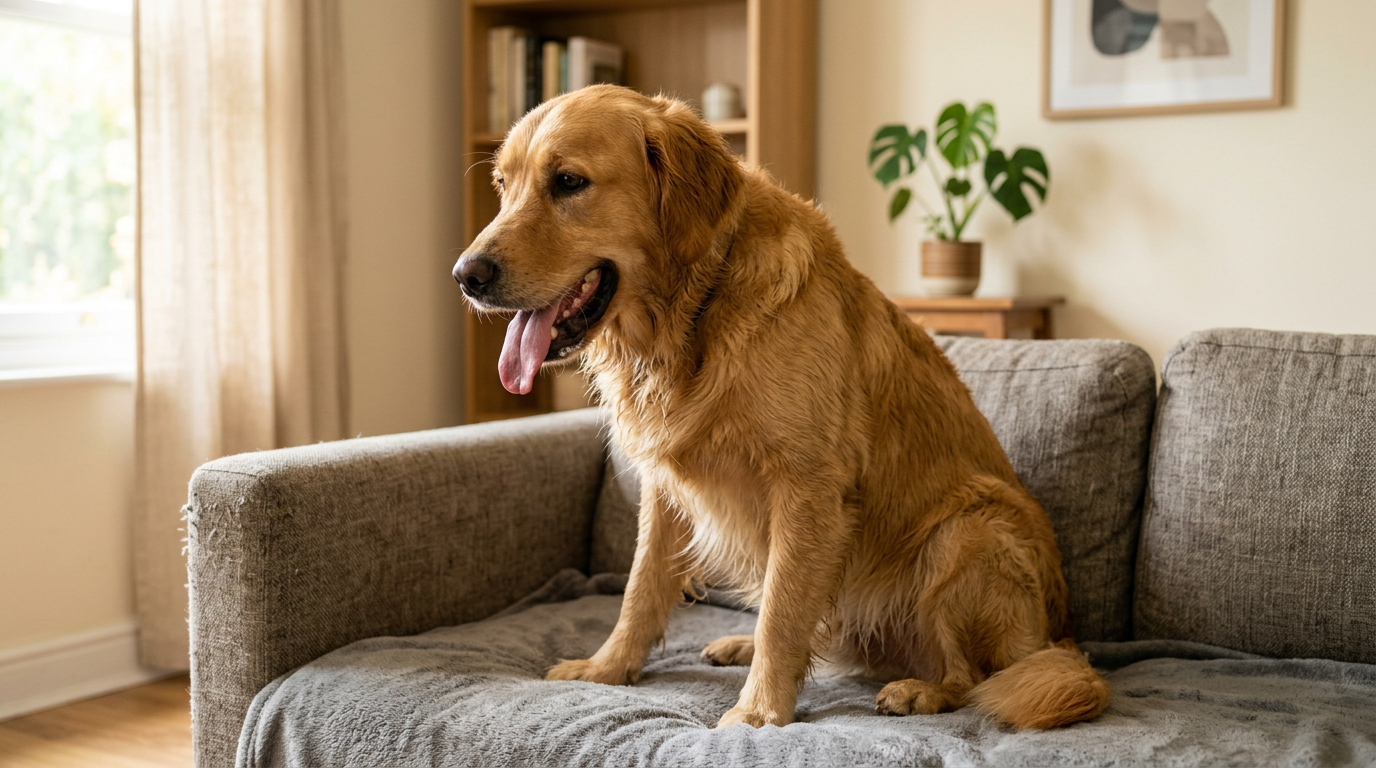
The Heat Factor: Dog Panting and Shaking When It’s Hot Outside
Fear and Fireworks: Dog Panting and Shaking from Anxiety
The “Red Flags”: When Dog Shaking and Panting is a Medical Emergency
FAQ: Common Questions from Panicked Pet Parents
Conclusion: You’ve Got This, Pack Leader
There is nothing quite as gut-wrenching as looking over at your favorite armchair and seeing your pup visibly vibrating while gasping for air. Honestly, when my Golden Retriever, Biscuit, first started dog panting and shaking during one of those sudden Austin thunderstorms, my vet assistant training almost flew out the window in sheer panic. It’s that helpless feeling—not knowing if they’re just scared, overheated, or in serious pain.
- 1. 1. Decoding the Body Language: Why is My Dog Panting and Shaking?
- 2. 2. The Heat Factor: Dog Panting and Shaking When It’s Hot Outside
- 3. 3. Fear and Fireworks: Dog Panting and Shaking from Anxiety
- 4. 4. The “Red Flags”: When Dog Shaking and Panting is a Medical Emergency for dog panting and for dog panting and shaking
- 5. 5. FAQ: Common Questions from Panicked Pet Parents
- 6. 6. Conclusion: You’ve Got This, Pack Leader
- 7. Key Terminology & References
Real talk: we’ve all been there, and I’m here to help you breathe a little easier. We’ll cover the common culprits behind this “scary combo,” from the scorching Texas heat to hidden “ouch” moments you might be missing. We’ll also look at the vital red flags that mean it’s time to grab the keys and head to the clinic.
By the end of this, you’ll know exactly how to decode these signals and what to do next to keep your best friend safe and comfortable.
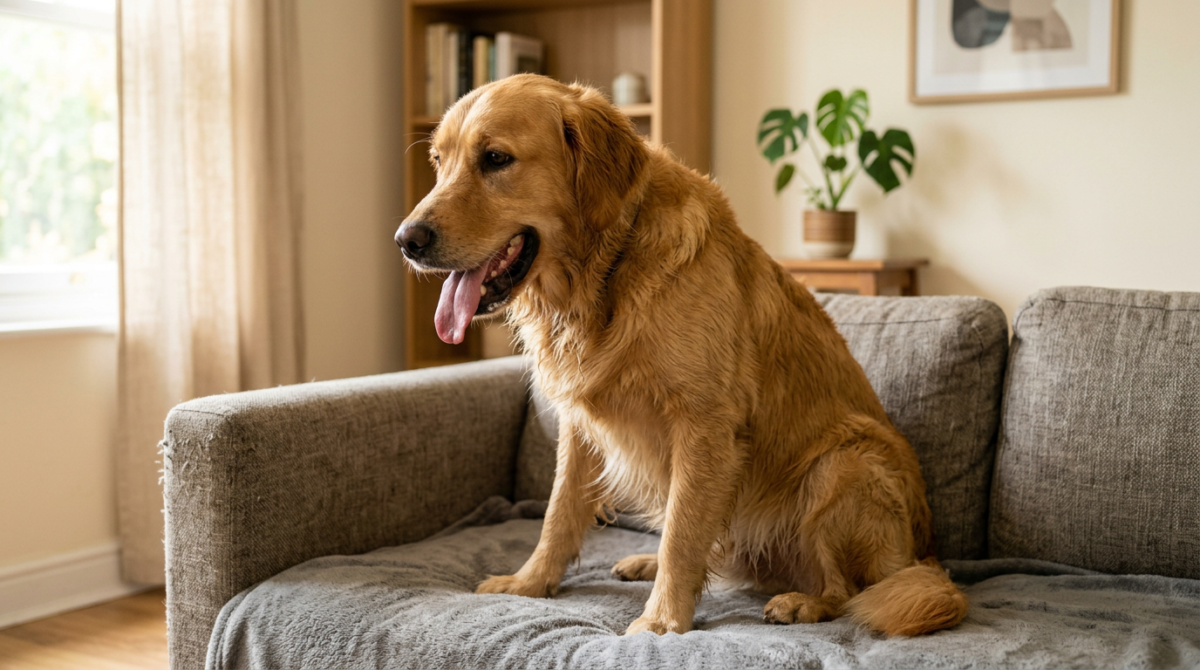
1. Decoding the Body Language: Why is My Dog Panting and Shaking?
When you see your pup dog panting and shaking, your first instinct is probably to ask: “What are you trying to tell me?” Honestly, it’s like your dog is speaking a dialect that hasn’t been added to Google Translate yet.
Think of these two behaviors as a pair of warning lights on a high-tech dashboard. On their own, they mean one thing. But when they light up at the same time, it tells us the entire system is struggling to stay balanced.
The “AC System” vs. the “Check Engine Light”
To understand this combo, we have to look at each part individually.
Basically, panting is your dog’s internal AC system. Since dogs don’t sweat through their skin like we do, they use evaporation from their tongue and lungs to dump heat. Think of it like a laptop fan spinning at high speed because the processor is working too hard.
Shaking, on the other hand, is the “Check Engine” light. It is a physical manifestation of an internal surge of energy—usually triggered by fear, excitement, or pain. It’s like when you’ve had three shots of espresso on an empty stomach; your hands might tremble because your nervous system is on overdrive.
When you see them together, it means for you and your pet that they aren’t just “warm”—they are likely experiencing a massive spike in their sympathetic nervous system.
The “Fight or Flight” Response: The Science in Plain English
In my Animal Science classes at Texas A&M, we spent a lot of time on the sympathetic nervous system.
Essentially, this is the body’s “emergency response” mode. Think of it like a security system in a house. When the alarm is triggered, the lights flash (shaking) and the sirens wail (panting).
The Trigger: Something scares them, hurts them, or overheats them.
The Reaction: Adrenaline floods the body.
The Result: The heart rate goes up, and the body prepares to either run away or stay and fight.
I remember a client back at the clinic named Mike who had a sweet Beagle named Cooper. Cooper started dog panting and shaking every time Mike picked up a certain orange backpack. Mike thought Cooper was just excited for a hike.
What this means for you and your pet is that context is everything. It turned out that orange backpack was what Mike used to take Cooper to the vet! Cooper wasn’t excited; he was “reliving” the stress of the clinic before they even left the driveway.
Why Do They Happen Together?
You might wonder why they don’t just pick one. Why both?
Think of your dog’s emotional state like a boiling pot of water with a lid on it. The shaking is the lid rattling because of the pressure inside. The panting is the steam escaping from under the edges.
If your dog is terrified of thunder, their body is vibrating from the fear (shaking), but that intense fear also makes their heart race and their body temperature rise—so they have to pant to cool that internal “engine” back down.
《Decoding your dog’s silent signals》
The “ABC Scan”: How to Play Detective
When your dog starts dog panting and shaking, I want you to stop and do a quick “ABC Scan” before you panic. This is what I used to tell every worried owner who called the clinic:
A – Airway & Mouth: Look at the tongue. Is it bright red (overheating) or pale (serious medical issue)?
B – Body Language: Is the tail tucked? Are the ears pinned back? This points toward fear or anxiety.
C – Context: Did something just change? A loud noise? A new person? Or did you just come back from a walk in the Texas sun?
Real talk: 90% of decoding your dog is just being a good observer. I once caught Biscuit shaking and panting in the kitchen. I was about to call the vet, but then I realized a single blueberry had rolled under the fridge and he was just “stressed” because he couldn’t reach it.
Knowing the “Normal” Baseline
Every dog is different. A Chihuahua might shake if a leaf blows by, while a Golden Retriever might only shake during a hurricane.
Think of it like your car’s idle speed. Some cars vibrate a little more than others naturally. You need to know what “normal” looks like for your specific pup so you can spot the “weird” stuff immediately.
《Is it pain or behavior? Use the checklist》
If the shaking and panting don’t stop after 10-15 minutes of rest in a quiet, cool room, that is a signal we shouldn’t ignore. In the next section, we’re going to dive deep into the #1 culprit here in Austin: the heat.
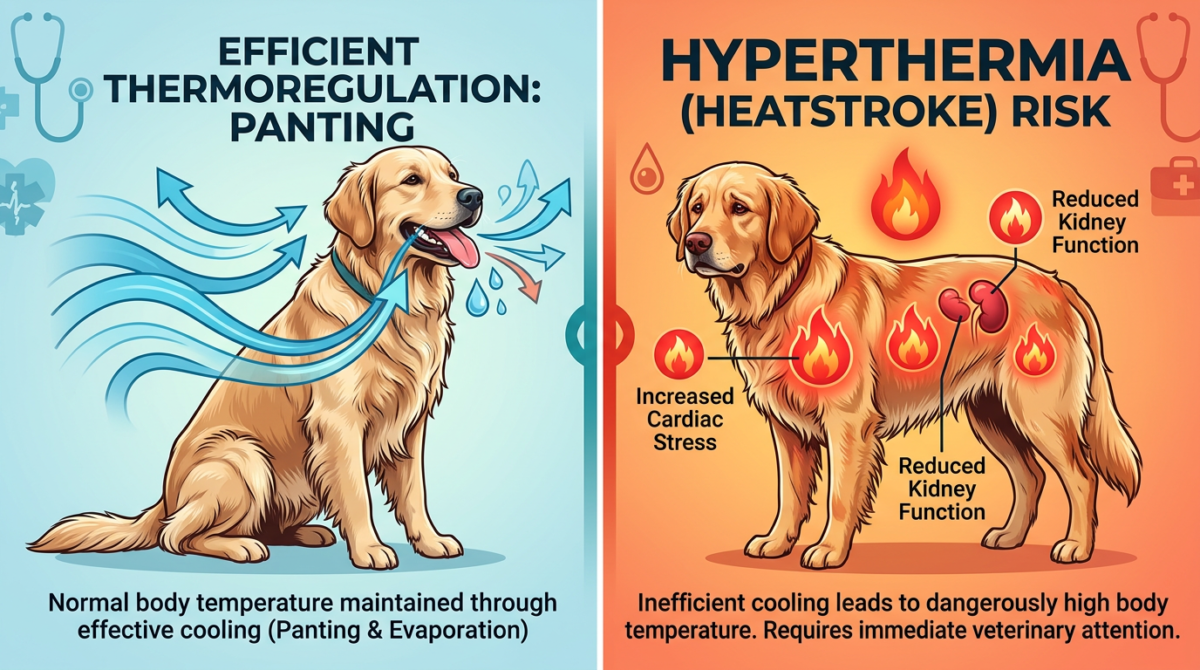
2. The Heat Factor: Dog Panting and Shaking When It’s Hot Outside
In Austin, our summers aren’t just “warm”—they are like living inside a giant air fryer. When you see your dog panting and shaking after being outdoors, you aren’t just looking at a tired pup. You are likely seeing the early stages of a life-threatening emergency.
Dogs are incredibly stoic, meaning they’ll keep following you down the trail until their internal “engine” literally starts to melt. Understanding how they handle heat is the first step to keeping them safe.
The Overheating Crisis: What is Hyperthermia?
In my classes at Texas A&M, we focused a lot on hyperthermia.
Basically, hyperthermia is when a dog’s body temperature rises far above the normal range (101°F to 102.5°F) because they can’t dump heat fast enough. Think of your dog’s body like a car radiator on a 100-degree day. If the coolant is low and you’re driving uphill, the needle hits the red zone, the steam starts hissing, and the engine starts to shudder. The panting is the steam escaping, and the shaking is the engine shuddering before it shuts down.
What this means for you and your pet is that once the shaking starts, their internal organs are already struggling to cope with the heat. It’s a massive red alert.
The “Silent Killer”: Why They Shake When They’re Hot
You might think, “I get why they pant, but why the shaking?”
Essentially, severe heat causes a massive electrolyte imbalance. Think of it like a power surge in your house during a storm. When the “electricity” (the minerals like sodium and potassium in their blood) gets out of whack, the muscles start to misfire. This leads to those visible tremors and weakness.
I remember a Golden Retriever named Max who came into our clinic on a Saturday in July. His owners had taken him for a “quick” walk at Lady Bird Lake at 2 PM. Max was panting and shaking so hard he couldn’t even stand. His internal temperature was 106°F. This is what it actually means for you: at 106°F, a dog’s brain and kidneys can start to suffer permanent damage in minutes.
The “7-Second Pavement Test”
Before you even step out the door, I want you to use my favorite “neighbor-approved” safety check.
Think of the sidewalk like a cast-iron skillet on a hot stove. If you wouldn’t put your bare hand on it, don’t put your dog’s paws on it.
The Test: Place the back of your hand on the pavement for 7 full seconds.
The Rule: If it’s too hot for you to keep your hand there, it is guaranteed to burn your dog’s paw pads and radiate heat directly into their belly, leading to dog panting and shaking almost instantly.
Emily’s Emergency Cooling Protocol
If you suspect your dog is overheating, don’t wait. Every second counts. Here is exactly what to do—and what not to do:
Stop and Seek Shade Immediately: Get them out of the sun. If you’re near a car with AC, get them in it.
Use Lukewarm Water, Not Ice Water: This is the most common mistake! Think of it like a cracked windshield. If you pour ice-cold water on a hot windshield, it shatters. If you use ice water on an overheating dog, their blood vessels constrict (narrow), which actually traps the heat inside their core. Use room-temperature water on their paws, belly, and armpits.
Use a Fan: Evaporative cooling is your best friend. Wet them down and then move air over them. This mimics the sweat they can’t produce.
Offer Water, But Don’t Force It: Let them lap small amounts. Don’t pour it down their throat, or they might inhale it into their lungs.
《Checklist of emergency symptoms to assess the severity of heatstroke.》
When the “Austin Adventure” Needs to End
Honestly, between June and September, Biscuit and I do our “big hikes” before 8 AM or after 8 PM. If it’s 95°F out, he’s staying inside with Mango the cat under the ceiling fan.
Real talk: No hike is worth a trip to the ER. If your dog is panting and shaking after a walk, and they don’t seem to settle down within 10 minutes of being in the AC, grab your keys.
《Interpreting the meanings behind different types of panting in dogs.》
Heatstroke is a “snowball effect” injury. Once it starts rolling, it gets bigger and faster very quickly. By acting fast and knowing the signs, you aren’t just being a “helicopter pet parent”—you’re being a lifesaver.
3. Fear and Fireworks: Dog Panting and Shaking from Anxiety
Honestly, there is nothing that breaks my heart quite like seeing Biscuit—my brave, 70-pound Golden Retriever—try to crawl under a tiny end table during a 4th of July firework show. When you see your dog panting and shaking during these moments, they are experiencing a full-blown panic attack.
In my behavior classes, we talked a lot about Noise Phobia.
Basically, noise phobia is an extreme, irrational fear of loud sounds that triggers a “survival” response in the brain. Think of your dog’s brain like a home security system with a short circuit. The system thinks a burglar is breaking in, so it’s flashing all the lights (shaking) and sounding every siren (panting), even though it’s just a neighbor’s firework. What this means for you and your pet is that they aren’t choosing to be “dramatic”—their nervous system has literally taken over the steering wheel.
The “Invisible Monsters”: Why Storms Are Worse Than Just Noise
Did you know that dogs can sense a thunderstorm hours before we even see a cloud? It’s not just the “boom” that scares them.
Essentially, dogs are sensitive to changes in barometric pressure and static electricity. Think of it like being zapped by a wool rug and squeezed by a tight blood pressure cuff at the same time. As the storm rolls in, the static in the air builds up in their fur, and the pressure change makes their ears and joints feel “weird.”
I remember a client named Sarah whose Australian Shepherd would start panting and shaking while the sun was still shining. Sarah thought he was being “weird,” but ten minutes later, a massive Austin storm would roll in. According to behavioral data, about 40% of dogs deal with some form of noise anxiety. That means for you and your pup, you aren’t alone in this, and it’s a very real physical sensation for them.
Creating a “Safe Haven” (The Thunder Corner)
Instead of just telling them to “hush,” we need to give them a “Panic Room.” I have a specific “Thunder Corner” in my house for Biscuit that works wonders.
Think of a Safe Haven like a noise-canceling cocoon for your dog. * The Setup: Use a crate covered with a heavy blanket or a closet with the door left slightly ajar.
The Soundscape: Use a white noise machine or a fan. It’s like turning up the radio in your car to drown out a rattling engine. It gives their brain something else to focus on.
The “Lighthouse”: Keep the lights on. It helps mask the flashes of lightning that often trigger the “shaking” part of the cycle.
《Understanding the meaning of different stress signals in dogs.》
Emily’s Anxiety Toolkit: How to Handle the Shakes
If the world is exploding outside, here is how you can help your best friend reclaim their calm:
Try a Thundershirt: This is a snug wrap that applies gentle, constant pressure. Think of it like a weighted blanket for a human. It helps lower their heart rate and stops the worst of the shaking.
The “Jackpot” Counter-Conditioning: When a boom happens, toss a high-value treat (like a piece of cheese). We want to change their brain’s “wiring” from “Boom = Scary” to “Boom = Snack.”
Mental Drain: If you know a storm is coming, do a 15-minute “Sniffari” or use a lick mat. A tired brain has less energy to spend on panicking.
Stay Calm Yourself: Dogs are “emotional sponges.” If you are running around closing windows and acting stressed, they will think, “See! Mom is scared too! We ARE in danger!”
《Checklist to determine if anxiety is accompanied by other health issues.》
Real talk: If your dog is panting and shaking so hard they are hurting themselves or trying to jump through windows, it’s time to talk to your vet about “event-based” medication. There is no shame in using science to help your dog through a terrifying night. What this means for you and your pet is that sometimes, love isn’t enough—and that’s okay. By creating a safe space and understanding the “invisible” side of their fear, you can help them navigate the storm without the “scary combo” taking over.
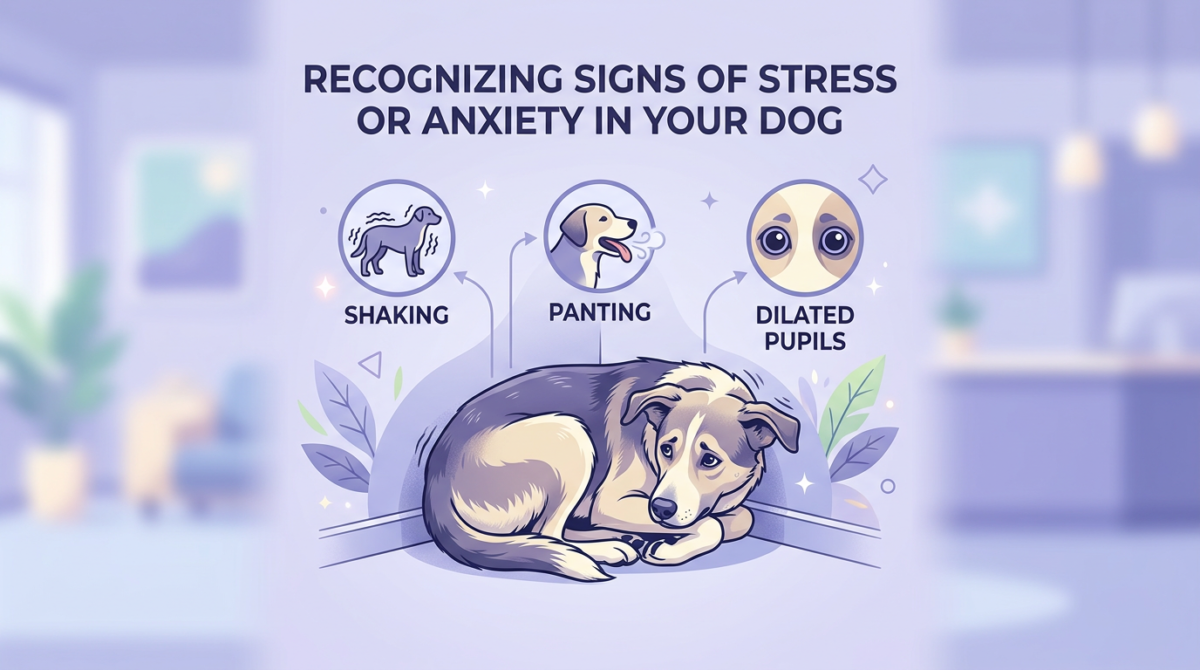
4. The “Red Flags”: When Dog Shaking and Panting is a Medical Emergency for dog panting and for dog panting and shaking
Honestly, this is the part of being a pet parent that keeps us up at night. We’ve talked about heat and anxiety, but what if there’s no thunderstorm and you’ve been sitting in the AC all day? When you see your dog panting and shaking out of the blue, it’s often their only way of shouting, “Hey, I need a doctor, and I need one now!”
In the clinic, we used to call this the “Silent Scream.” Dogs are masters at hiding their pain—it’s an old survival instinct from their wild ancestors. By the time they are physically shaking and breathing heavy, they are usually past the point of “just a little uncomfortable.”
The “Hidden Fire”: Internal Pain and Inflammation
One of the most common medical reasons for dog shaking and panting is acute internal pain.
Basically, acute pain is a sharp, sudden physical distress that triggers a massive stress response in the body. Think of your dog’s body like a highly sensitive security system. When there’s an internal “break-in”—like a ruptured cyst or a painful bout of pancreatitis—the system goes into full-blown panic mode. The sirens wail (panting) and the building vibrates (shaking).
I remember a sweet Beagle named Daisy who came into our clinic back in 2019. Her owners thought she was just “acting weird” after dinner. She was panting and shaking, and her belly felt hard as a rock. What this means for you and your pet is that a rigid stomach combined with the shakes is a major red flag for something like GDV (Bloat).
GDV (Gastric Dilatation-Volvulus), or “Bloat,” is essentially when a dog’s stomach fills with gas and then twists on itself. Think of it like a kinked garden hose that is still turned on. The pressure builds up, cutting off blood flow to the rest of the body. It is a 10/10 emergency. If your dog is shaking, panting, and unsuccessfully trying to vomit, don’t call the vet—just start the car.
Toxins: The “Accidental Poisoning” Spikes
Living in a busy house means things like chocolate, grapes, or sugar-free gum (containing Xylitol) sometimes end up on the floor.
Essentially, many toxins act as “neurological disruptors” in dogs. Think of it like pouring salt water onto a delicate computer circuit board. The signals get fried, leading to muscle tremors (shaking) and an elevated heart rate that makes them breathe heavy (panting).
The Data: According to poison control records, even a small amount of Xylitol can drop a dog’s blood sugar to dangerous levels in under 30 minutes.
The “So What?”: This means if your dog is panting and shaking but no fever is present, and you suspect they raided the pantry, you have a very narrow window to get them help.
《Checklist to determine if a dog is experiencing poisoning or other urgent health issues.》
When the “Delivery Trucks” Stop: Understanding Shock
Sometimes, the shaking isn’t about pain or toxins—it’s about Shock.
In plain English, shock is a life-threatening condition where the body’s “delivery trucks” (the blood) stop carrying enough oxygen to the vital organs. Imagine a massive traffic jam on I-35 during rush hour in Austin. Nothing is moving, the supplies aren’t getting through, and the whole city (the body) starts to shut down.
When a dog is in shock—perhaps from an undiagnosed heart issue or internal bleeding—their body starts to tremble as it tries to keep the core warm, and they pant rapidly to try and get more oxygen into the system.
The 10-Minute “Safe or Sorry” Checklist
If your dog is shaking and panting, and you aren’t sure if it’s an emergency, I want you to do this “Vet Assistant Scan” immediately:
Check the Gums: Lift the lip. They should be a healthy bubblegum pink. If they are pale, white, blue, or muddy red, that is a “get in the car” emergency.
The “Capillary Refill” Test: Press your finger on their gum until it turns white, then let go. It should turn pink again in under 2 seconds. If it stays white longer, their “delivery trucks” are stuck in traffic (Shock).
Check for “Glazed Eyes”: If they aren’t making eye contact or seem “out of it,” their brain isn’t getting what it needs.
Temperature Check: If their ears or paws feel icy cold while they are panting, their body is diverting heat to their core to stay alive.
《Understanding the meaning of different stress signals and body language in dogs.》
Real talk: I have never once met a veterinarian who was mad at an owner for bringing in a dog that turned out to be “just fine.” But I have seen many heartbroken owners who waited “just one more hour.” If you see the red flag signs—especially the pale gums or the rigid belly—trust your gut.
What this means for you and your pet is that you are their only advocate. You know their “normal” better than anyone. If the panting and shaking feels different than a thunderstorm scare, it probably is. Grab your keys, grab the leash, and let the pros handle the rest.

5. FAQ: Common Questions from Panicked Pet Parents for dog panting and shaking
Whenever I’m hanging out at a dog-friendly patio on South Congress, I usually get a few “quick questions” about dog panting and shaking. Most of the time, owners just want to know if they are overreacting. Honestly, in the world of pet parenting, there is no such thing as overreacting! Here are the big ones that always come up.
“Can I give my dog Benadryl for shaking?”
I see this advice on the internet all the time, and it makes my “vet assistant” heart skip a beat. Basically, Benadryl (diphenhydramine) is an antihistamine used for allergies, not a sedative for pain or anxiety. Think of it like putting a Band-Aid on a broken leg. It might make them a little drowsy, but it’s not fixing the “broken” part (the fear or the pain). Even worse, if your dog is panting and shaking because of a heart issue or a toxin, Benadryl could actually make the situation more dangerous. What this means for you and your pet is: never be your own pharmacist. Always call your vet before reaching into your own medicine cabinet.
“My dog is panting and shaking after a bath—is that normal?”
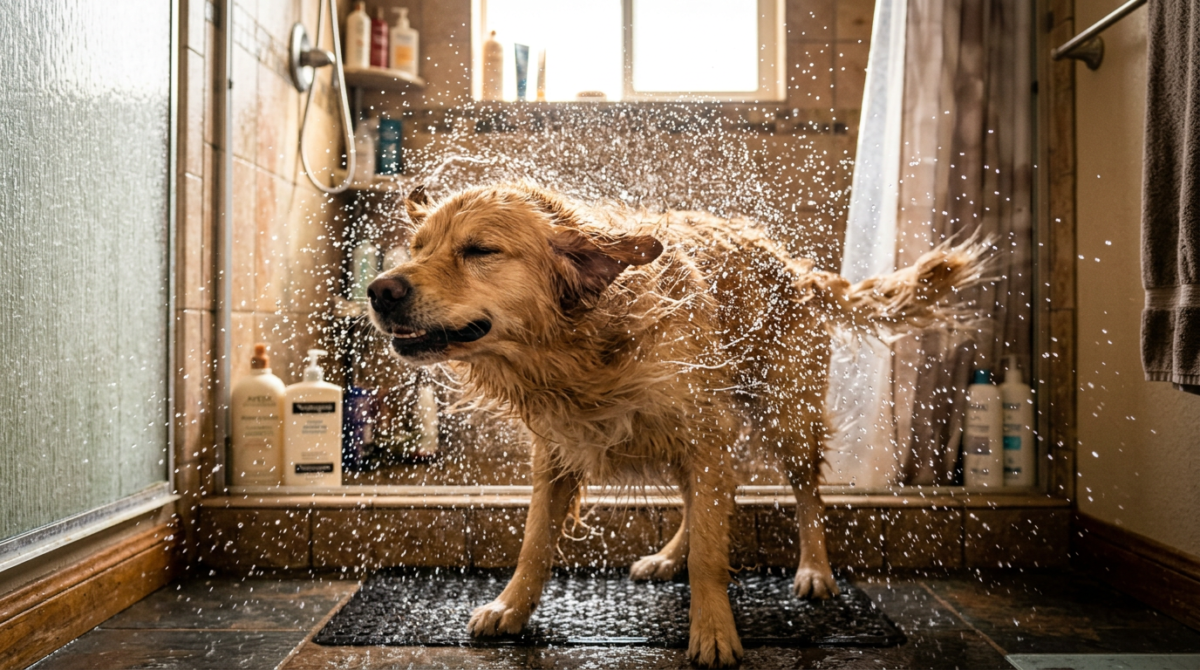
Believe it or not, this is actually pretty common! Essentially, many dogs experience a “post-bath adrenaline dump.” Think of it like the “Zoomies” on steroids. The shaking is often a physical way to release the built-up stress of being in the tub, and the panting is them trying to cool down if the water was a bit too warm. I remember Biscuit used to do a “shiver-and-sprint” routine after every bath. What this means for you: if they settle down within 10 minutes and start acting like their goofy selves again, it was likely just a stressful spa day.
“How long should I wait before calling the vet?”
If you’ve moved them to a cool, quiet room and the dog panting and shaking hasn’t improved, I use the “15-Minute Rule.” Think of this like waiting for a computer to reboot. If you’ve closed the “heavy programs” (removed the stress or the heat) and the “fan” is still screaming after 15 minutes, something is wrong with the hardware. According to clinical observations, most non-emergency stress or heat issues should show signs of improvement within that 15-minute window. If they are still distressed after that, it’s time to call the pros.
《In-depth guide to assessing abnormal behavior in dogs.》
6. Conclusion: You’ve Got This, Pack Leader for dog panting and
Being a pet parent is a massive responsibility, and it’s okay to feel your heart race when you see the “scary combo” of dog panting and shaking. Whether it’s just a reaction to the brutal Austin sun, a terrifying firework show, or a hidden medical “red flag,” the fact that you’re here looking for answers means you’re already doing a great job.
Remember, you are the world’s leading expert on your own dog. You know the difference between their “I’m excited for a walk” pant and their “I’m in trouble” pant. Think of yourself as your dog’s First Responder. You don’t have to have a medical degree to save their life; you just have to be a good observer and know when to ask for help.
Your “Next Step” Action Plan
If you’re dealing with the shakes and pants right now, here is your 3-step checklist to regain control:
Check the “Dashboard” (The Gums): Are they pink? Great. If they are pale or blue, head to the vet now.
Reset the Environment: Get them to a cool, dark room with some white noise. Remove the “trigger” (the sun, the vacuum, the loud kids).
Use the 15-Minute Rule: Set a timer. If they aren’t settling down by the time it dings, grab the leash and the keys.
《Emergency health checkup checklist for dogs.》
Real talk: We all have those moments where we feel like we have no idea what we’re doing. I’ve been there with Biscuit more times than I can count. But by staying calm and knowing the red flags, you’re giving your best friend the best chance at a long, happy life.
Has your dog ever given you a “panting and shaking” scare? What turned out to be the cause? Drop a comment below—let’s swap stories and help each other out!
Stay pawsitive,
Emily Carter
Key Terminology & References
To provide our readers with accurate scientific context, the following professional terms are linked directly to their respective entries in the Wikipedia Encyclopedia.
—————————————-
Symptoms
Conditions
Anatomy
Breeds
Animal Science
Understanding your dog breathing patterns is important. Read about Why Is My Dog Breathing Heavy: Causes and Solutions for more insights.
Conclusion
Abnormal breathing in dogs should never be ignored, as it can signal anything from heat stress to serious respiratory or cardiac conditions. By familiarizing yourself with your dog’s normal breathing patterns and knowing the warning signs of distress, you can act quickly when something is wrong. When in doubt, seeking veterinary evaluation is always the safest course of action.