
html {
scroll-behavior: smooth;
}
.emily-toc {
background-color: #fcfcfc;
border-left: 5px solid #d35400; /* A warmer, Austin-sunset orange-red */
border-top: 1px solid #eee;
border-right: 1px solid #eee;
border-bottom: 1px solid #eee;
box-shadow: 0 10px 20px rgba(0, 0, 0, 0.05);
border-radius: 12px;
padding: 24px;
margin: 30px 0;
max-width: 100%;
font-family: ‘Segoe UI’, Roboto, Helvetica, Arial, sans-serif;
}
.toc-title {
font-size: 18px;
text-transform: uppercase;
letter-spacing: 1.5px;
color: #7f8c8d;
margin-bottom: 20px;
font-weight: bold;
display: flex;
align-items: center;
}
.toc-title::after {
content: “”;
flex: 1;
margin-left: 15px;
height: 1px;
background-color: #eee;
}
.emily-toc a {
display: flex;
align-items: flex-start;
font-size: 19px;
line-height: 1.5;
text-decoration: none;
color: #2c3e50;
padding: 10px 8px;
margin-bottom: 4px;
border-radius: 6px;
transition: all 0.2s ease-in-out;
}
.emily-toc a:before {
content: “🐾”; /* Adding a little Emily-style paw print */
margin-right: 12px;
font-size: 16px;
opacity: 0.6;
}
.emily-toc a:hover {
background-color: #fdf2e9;
color: #d35400;
padding-left: 15px;
}
@media (max-width: 600px) {
.emily-toc a {
font-size: 17px;
}
}
The “Corn on the Cob” Sound: Understanding Dog Chewing Paws
The Usual Suspects: Common Causes for Dog Chewing Paws and Itching
More Than Skin Deep: Anxiety and Boredom as Triggers
Immediate Relief: Dog Chewing Paws Remedies You Can Do Today
FAQ: Real Questions from Real Pet Parents
Emily’s “Quiet Paws” Action Plan (Conclusion)
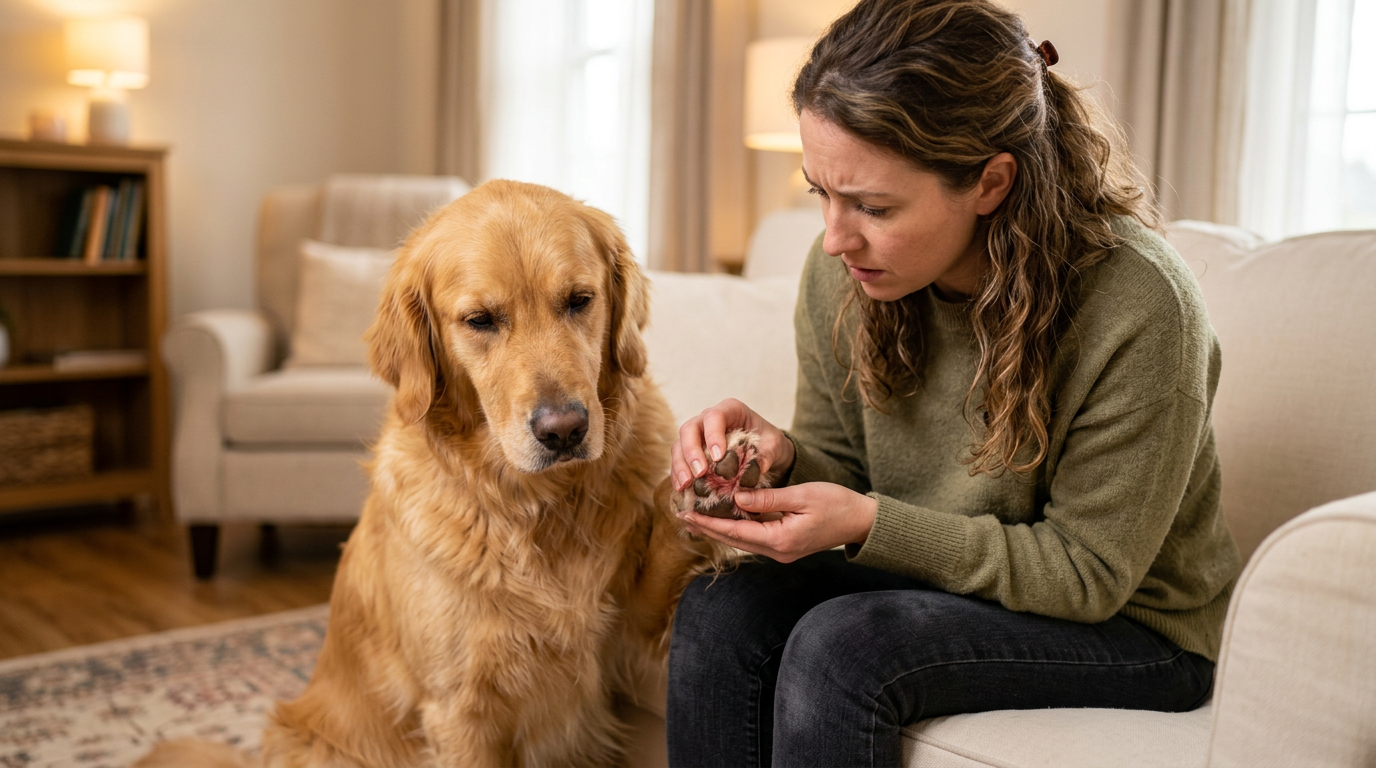
Is there anything more bone-chilling than that wet, rhythmic crunch-slurp sound echoing through the house at 3 AM? Honestly, when my Golden, Biscuit, first started his frantic “corn-on-the-cob” routine, I thought he’d found a stray snack—but the reality of dog chewing paws is usually much itchier. It’s heartbreaking to see them gnaw until their fur turns rusty red and their pads get raw.
- 1. 1.The “Corn-on-the-Cob” Sound: Understanding Dog Chewing Paws
- 2. 2. The Usual Suspects: Common Causes for Dog Chewing Paws and Itching
- 3. 3. More Than Skin Deep: Anxiety and Boredom as Triggers for Dog Chewing Paws
- 4. 4. Immediate Relief: Dog Chewing Paws Remedies You Can Do Today
- 5. 5. FAQ: Real Questions from Real Pet Parents for dog chewing paws
- 6. 6. Emily’s “Quiet Paws” Action Plan (Conclusion)
- 7. WIKIPEDIA REFERENCE LINKS
Real talk: whether it’s Austin’s brutal pollen or just a case of “the Mondays,” you’re likely staring at your pup wondering if you should call the vet or raid the pantry. We’re going to cover everything from the “Frito feet” yeast mystery to the simple home soaks that actually stop the itch.
By the end of this, you’ll have a concrete game plan to soothe those paws today and prevent the chew from coming back tomorrow. Let’s get your furry best friend some much-needed peace (and let you finally get some sleep).
1.The “Corn-on-the-Cob” Sound: Understanding Dog Chewing Paws
Have you ever been sitting on the couch, finally relaxing after a long day, only to hear that rhythmic, wet crunch-crunch-slurp coming from the rug? It sounds exactly like someone eating corn on the cob with way too much enthusiasm. When Biscuit first started doing this, I’d look over and see him absolutely going to town on his front paw, his eyes glazed over in a weird kind of “itch-relief” trance.
Is it Normal or a Problem?
In the vet world, we call this paws-focused grooming, but when it gets intense, it’s actually a cry for help. Think of your dog’s paws like the tires on your car. They are the only part of the body constantly touching the ground, picking up heat, chemicals, and allergens.
Basically, paw chewing is your dog’s way of trying to “scratch” an itch they can’t reach with their back legs. Imagine having a mosquito bite inside your shoe while you’re wearing boots—you’d want to rip those boots off and scrub your skin too, right? That is exactly what dog chewing paws looks like from your pup’s perspective.
A little licking after a walk is normal cleaning. However, if they are gnawing like they’re trying to find a prize inside their toe, the “grooming” has crossed the line into a medical issue.
The “Red Flag” Checklist: Playing Detective
When I worked at the clinic, I saw so many owners who waited until the paw was a bloody mess before coming in. I don’t want that for you! You can spot the trouble much earlier by looking for saliva staining.
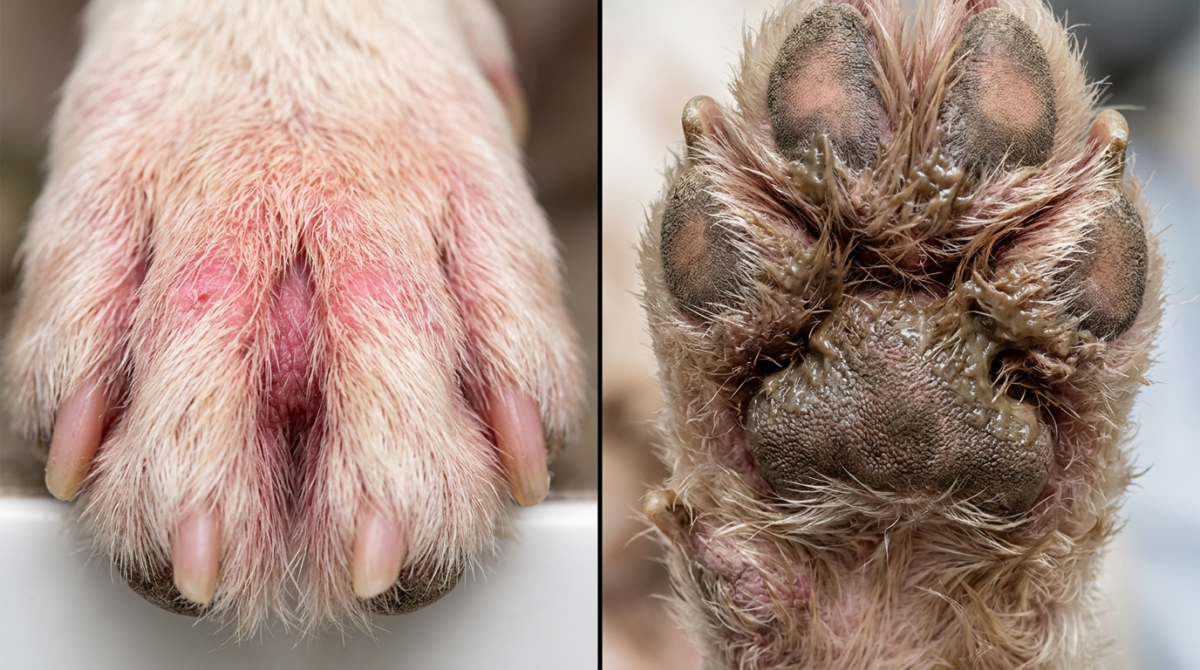
Saliva staining is when a dog’s fur turns a rusty, reddish-brown color from constant licking. Think of it like a leaky faucet that leaves a brown ring in your white porcelain sink over time. If your white or tan dog suddenly has “red” slippers, that’s not dirt—it’s a sign they’ve been chewing for days or weeks.
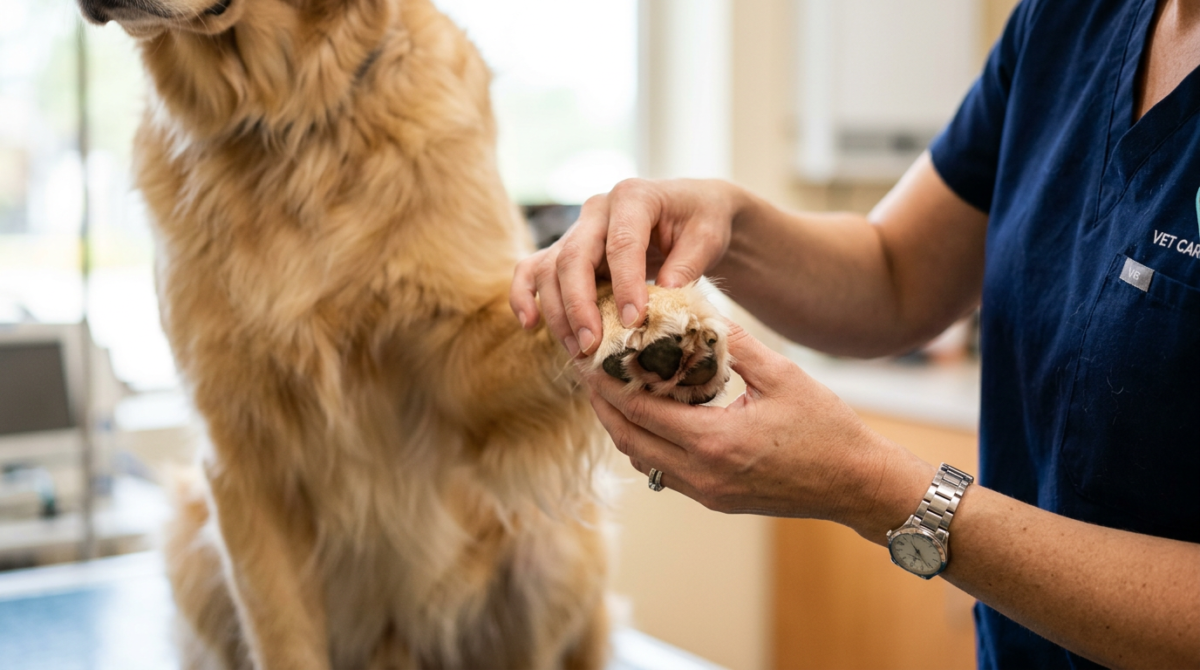
Here is how to do a 60-second paw exam at home:
The Heat Test: Gently hold your dog’s paw in your hand. Does it feel noticeably hotter than their leg? Inflammation—basically the body’s “emergency response team” sending extra blood to the area—always creates heat.
The “Between the Toes” Peek: Spread the toes wide (most dogs hate this, so be gentle!). Look for skin that looks like a raw hamburger or has a “slimy” texture.
The Smell Test: If the paw smells like a bag of corn chips (that’s the yeast party we’ll talk about later!), you’ve got an overgrowth issue.
The Clinic Perspective: Why “Wait and See” is a Trap
I’ll never forget a sweet chocolate Lab named Cooper who came into our clinic back in 2018. His mom thought he was just “anxious” and let him chew for a month. By the time I saw him, he had developed a lick granuloma—which is essentially a thick, raised scar caused by constant tongue friction.
Think of it like a callous on a guitar player’s finger, but much angrier and prone to infection. What this means for you and your pet is that the longer the chewing goes on, the harder it is to stop. Once the skin thickens, it stays itchy forever, creating a loop that home remedies alone can’t break.
“Dog Skin Allergies: The Ultimate Guide to Treatment, Home Remedies & Diet”
What You Can Do Right Now (The 5-Minute Fix)
If you catch your dog in the middle of a “corn-on-the-cob” session, don’t just yell “Stop it!” That just stresses them out and makes them want to chew more.
Interrupt and Redirect: Instead of a scolding, grab a high-value treat or a frozen toy. Give their brain something else to process.
The Cool Rinse: If they just came from outside, rinse the paws in plain, cool water for 60 seconds. This washes off the “itchy dust” (pollen) before it can sink in.
Check for “Hitchhikers”: Look for small pebbles, burrs, or those annoying Austin “stickers” (grass seeds) that might be physically poking them.
2. The Usual Suspects: Common Causes for Dog Chewing Paws and Itching
When your pup starts that frantic biting, your first instinct might be to change their food. But hold on! While “food allergies” get all the bad press on social media, they actually account for less than 10% of skin issues. Most of the time, the culprit is something they stepped in, not something they swallowed.
Think of your dog’s paws like a specialized Swiffer mop. As they run through the yard, those furry toes are literally designed to trap everything—dust, mold, and every bit of “Austin mountain cedar” pollen out there.
Environmental Allergies: The “Texas Special”
In my years at the clinic, we could almost tell what month it was just by looking at a dog’s paws. We call this atopy—basically, it’s when a dog’s immune system goes into “overdrive” because of something they touched or inhaled. Imagine if every time you walked outside barefoot, your feet felt like they were covered in invisible poison ivy. That’s what grass pollen feels like to an allergic dog. Because they can’t take their shoes off, the “itch” just stays trapped between their pads until they try to chew it out.
The “Frito Feet” Fungus: A Yeast Party
Have you ever noticed your dog’s paws smell exactly like a bag of corn chips? We joked about it at the hospital all the time, but that smell is actually a sign of Malassezia—which is just a fancy vet word for a yeast infection.
Think of yeast like the sourdough starter in your kitchen. In small amounts, it’s harmless. But paws are dark, warm, and moist (especially after a walk in the dew). That is a “Five-Star Resort” for yeast. Once they start multiplying, the skin becomes greasy, smelly, and incredibly itchy.
Pests in the Toes: The “Hitchhiker” Effect
Sometimes dog chewing paws is triggered by a single, tiny intruder. Fleas love the soft, thin skin between the toes because it’s easy to bite. Even if your dog is on a preventative, a single “hitchhiker” flea from the dog park can cause an allergic reaction that leads to hours of chewing.
I remember a Beagle named Barney who came in with one paw chewed raw. His owner was convinced it was a food allergy. I pulled out my flea comb, and right there between his middle toes was one tiny flea. What this means for you and your pet is that a “local” itch (one paw only) is often a physical pest or an injury, while four itchy paws usually mean an environmental allergy.
[Dog Skin Allergies: Identification and Relief]
How to Tell Which One It Is
Before you rush to buy expensive “hypoallergenic” kibble, try these three detective steps:
The Wipe Test: Wipe one paw with a white paper towel. If it comes off brown or rusty, that’s saliva staining from long-term chewing. If it’s greasy and yellow, that’s likely a yeast infection.
The “One vs. All” Rule: Is it just the front left paw? Check for a thorn or a broken nail. Are all four paws red? It’s almost certainly an allergy or yeast.
The Season Check: Does it only happen when the Ragweed is high or right after you mow the lawn? If yes, you’re dealing with an environmental “contact” allergy.
3. More Than Skin Deep: Anxiety and Boredom as Triggers for Dog Chewing Paws
Sometimes, the reason for dog chewing paws isn’t something on the skin at all—it’s something going on between the ears. I remember a sweet Border Collie named Jasper who came into the clinic. His paws were stained deep mahogany from licking, but his skin was perfectly healthy underneath. No yeast, no allergies, no thorns.
It turns out, Jasper’s owner had recently started a high-stress job with long hours. Jasper was bored and anxious, and he’d discovered that chewing his feet made him feel better.
The “Pacifier” Effect: Why Chewing Feels Good
When a dog chews or licks persistently, their brain releases endorphins—which are basically the body’s natural “feel-good” chemicals. Think of paw chewing like a toddler sucking their thumb or an adult biting their nails when they’re nervous. It’s a self-soothing behavior. The repetitive motion calms the nervous system. The problem is that once the “habit” starts, the skin gets irritated, which creates a real itch, leading to more chewing. It’s a loop that’s hard to break once it starts rolling.
Is it Separation Stress or Just “The Mondays”?
You can usually tell if chewing is emotional by when it happens. Does your dog start working on their paws the second you grab your car keys? Or maybe they only do it during those 2 PM Zoom calls when you’re too busy to play?
Separation anxiety—basically a panic attack that happens when you leave—is a huge trigger for paw destruction. If the chewing only happens when they are alone or ignored, you’re dealing with a behavioral “outlet” rather than a medical itch.
The Boredom Loop: A Tired Dog has Healthy Paws
In a city like Austin, we have high-energy breeds (looking at you, Aussies and Goldens!) living in apartments or small yards. If their brain isn’t busy, they will find a job to do. Unfortunately, that job is often “dismantle my own front paw.”
Imagine being stuck in a waiting room for eight hours with no phone and no magazine—you’d start picking at your cuticles too. What this means for you and your pet is that sometimes the best “medicine” for paw chewing is actually a longer walk or a challenging puzzle toy.
How to Break the Behavioral Habit
If you suspect the “itch” is actually “boredom,” try these Emily-approved redirection tactics:
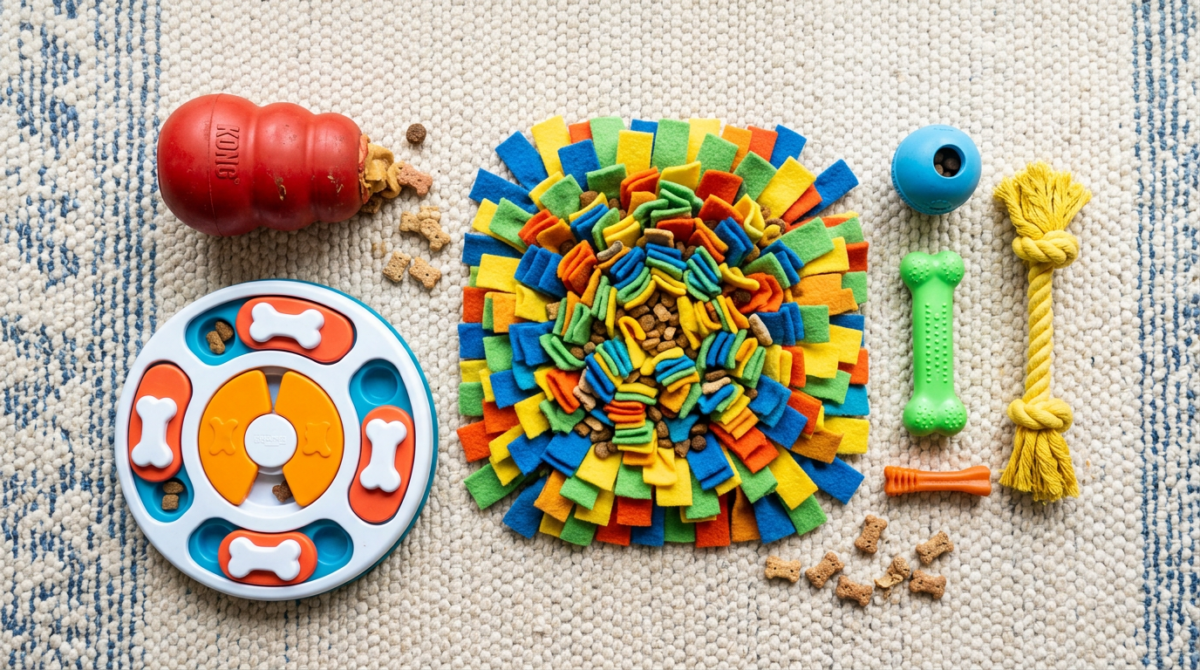
The “15-Minute Sniffari”: Instead of a fast walk, let your dog lead the way and sniff every single blade of grass. Sniffing for 15 minutes is as mentally exhausting for a dog as running for an hour. 2. The Frozen Treat Distraction: When you know a trigger is coming (like you leaving for work), give them a frozen Kong stuffed with plain yogurt or wet food. They can’t chew their paws if they’re busy working on a “popsicles.”
The “No-Go” Command: Don’t scold them. If you see the chewing, calmly say “Uh-oh!” and immediately toss a ball or start a training session. You want to replace the bad habit with a fun one.
[Anxiety in Dogs: How to Spot the Signs and Soothe the Stress]
【图片建议:dog_mental_stimulation_toys.jpg】 【Alt 文案:展示各种狗狗益智玩具:嗅闻垫、漏食球和冷冻Kong,说明如何分散注意力】 【AI 提示词:Flat lay photography of various colorful dog enrichment toys on a rug, a snuffle mat, a classic red Kong, and a puzzle feeder, bright natural light, clean and organized composition, 35mm lens.】
4. Immediate Relief: Dog Chewing Paws Remedies You Can Do Today
When Biscuit is mid-chew and the sound is driving us both crazy, I don’t want a “long-term plan”—I want that itch to stop now. In my clinic days, we’d always start with the most non-invasive ways to break the cycle.
Think of these remedies like putting a cold compress on a bee sting. They won’t fix a deep allergy, but they “quiet the noise” of the itch so the skin can actually start to heal. Here is my go-to toolkit for dog chewing paws relief that you can find right in your kitchen.
The Apple Cider Vinegar Soak: The “Sourdough” Reset
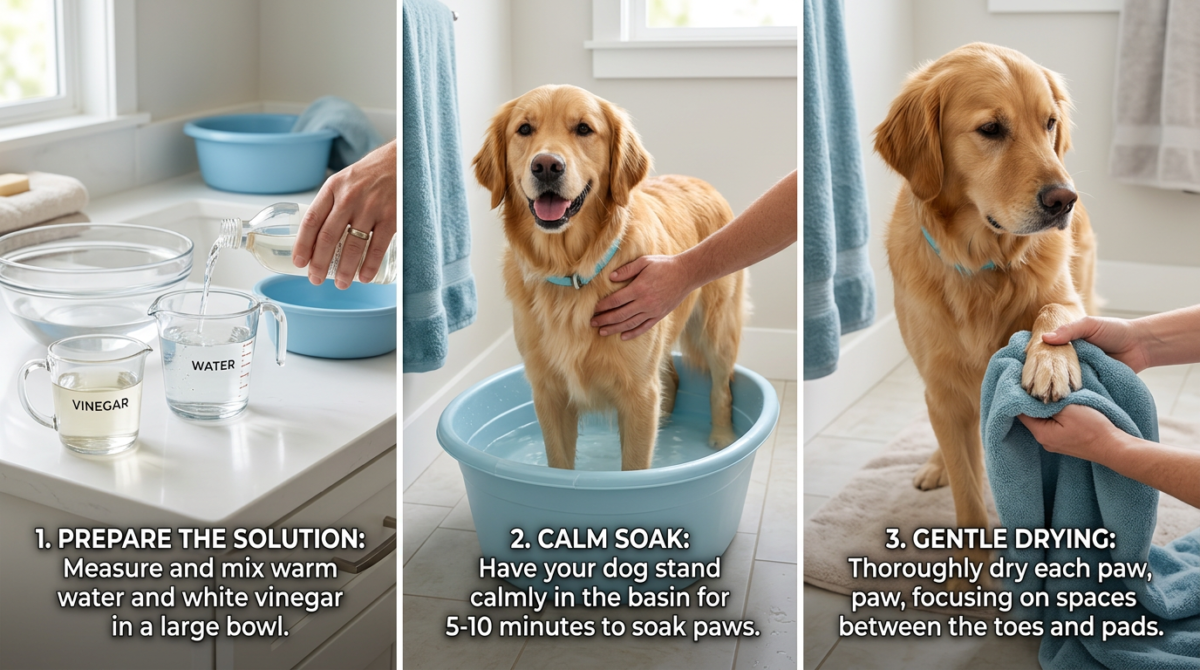
This is my absolute favorite for “Frito Feet.” Remember how we talked about yeast being like a sourdough starter? It loves a moist, sugary environment. Apple Cider Vinegar (ACV) is naturally acidic—basically, it changes the “vibe” of the skin so it’s no longer a welcoming place for yeast to grow. Imagine trying to have a party in a room where someone just turned the music off and turned the lights up too bright; that’s what ACV does to yeast.
The Mix: Use 1 part ACV to 2 parts lukewarm water in a small tub.
The Rule: Let your dog stand in it for a full 5 minutes.
The Warning: Never use this on raw or bleeding skin. If you’ve ever had vinegar touch a papercut, you know why. It stings!
The “Cooling Station”: Tea and Salts
If the paws are physically hot and pink (common after a walk on Austin’s Barden Creek trails), we need to lower the temperature.
Think of Epsom Salts or Green Tea like a “fire extinguisher” for inflamed skin. Epsom salts draw out excess fluid (the swelling), while the tannins in green tea act as a natural astringent—essentially a substance that shrinks body tissues and stops the “leakage” of itch signals.
Steep 3-4 Green Tea bags in a quart of hot water, then let it cool completely in the fridge.
Pour it into a shallow tray and let your dog stand in the “iced tea” for 3 minutes.
What this means for you and your pet is a natural, chemical-free way to numb the surface nerves just enough so they forget they were itchy.
Safe Topical Barriers: The “Sock Trick”
Once the paws are dry (and they must be bone-dry, because moisture invites the yeast back), you need to protect your work. I love using organic, cold-pressed coconut oil.
Coconut oil contains lauric acid—which is a natural “warrior” against bacteria and fungus. Think of it as an invisible, breathable glove for your dog’s pads.
The Emily Method: Rub a tiny amount into the pads.
The Sock Trick: If they try to lick the oil off, slide on a pair of toddler socks (the ones with the rubber grips). Use a little medical tape to secure the sock to the sock itself, never the fur. This keeps the “medicine” on the paw and off your hardwood floors.
[Best Natural Paw Balms for Cracked Pads: 5 Expert Reviews]
【图片建议:dog_acv_soak_tutorial.jpg】 【Alt 文案:展示如何为狗狗准备ACV足浴:配比、浸泡时长以及使用毛巾彻底擦干的过程】 【AI 提示词:Step-by-step infographic, clean photography. Panel 1: Measuring vinegar and water. Panel 2: A Golden Retriever calmly standing in a blue basin. Panel 3: A hand using a plush towel to dry between the toes. Professional, bright, helpful vibe.】
5. FAQ: Real Questions from Real Pet Parents for dog chewing paws
Whenever I post a photo of Biscuit on Instagram, my DMs basically turn into a “Paw Help Desk.” I get it! When your fur baby is uncomfortable, you want answers now. Here are the most common questions I used to hear in the exam room and the ones that pop up most in my inbox.
“Can I give my dog Benadryl for paw chewing?”
The short answer: Usually, yes—but it’s not a magic eraser. Benadryl (diphenhydramine) is an antihistamine.
Think of it like a “shield” that blocks the itch signals before they reach your dog’s brain. However, it only works for about 20% to 30% of dogs with skin allergies.
The Dose: The standard veterinary rule of thumb is 1mg per pound of body weight, given 2 to 3 times a day.
The Warning: Always check the label! Make sure it only contains diphenhydramine. If it has Tylenol (acetaminophen) or decongestants like pseudoephedrine, it can be fatal to dogs.
“Does my dog’s food brand really cause paw biting?”
It’s possible, but it’s rarely the first suspect. True food allergies—basically an overreaction to a specific protein like chicken or beef—are much less common than environmental allergies. Think of it like this: If you have a nut allergy, you’ll break out regardless of the weather. But if you have hay fever, you only itch when the pollen is high. If your dog chews their paws all year round, even in the dead of winter, then we start looking at the food bowl.
“Should I use a cone (the ‘Elizabethan Collar’) to stop the chewing?”
The “Cone of Shame” is a great tool, but it’s a Band-Aid, not a cure. The cone is like a “security guard” that keeps the tongue away from the paw so the skin can heal. If the skin is raw or bleeding, yes, use the cone! It prevents a secondary infection. But if you don’t find out why they are itchy, the second you take that cone off, they will go right back to chewing.
“What if my dog is only chewing one specific paw?”
This is a major clue! If all four paws are itchy, it’s usually an allergy (the “environment” is touching everything). But if it’s just the front left paw?
That’s usually a “local” problem—basically something physically wrong with that specific foot. Check for:
A broken or split nail.
A “sticker” or thorn wedged deep in the fur.
A small cyst or growth between the toes. What this means for you and your pet is that a “one-paw chew” needs a very close physical inspection before you try any general allergy soaks.
6. Emily’s “Quiet Paws” Action Plan (Conclusion) for dog chewing paws
We’ve covered a lot of ground today—from the “corn-on-the-cob” sounds that keep us up at night to the “sourdough” yeast parties happening in your pup’s toes. I know it can feel like a lot, but remember: you don’t have to solve every itch in a single afternoon.
Think of paw care like brushing your own teeth. It’s a small, daily habit that prevents a massive, expensive headache down the road. If you can commit to just five minutes of “paw maintenance” after your big walks, you’re already ahead of 90% of pet parents.
Your 48-Hour Observation Rule
Before you try any new dog chewing paws remedy, take a quick “Before” photo of the irritated area. When we see our dogs every day, it’s hard to notice the subtle healing.
Day 1: Start with a 5-minute cool Green Tea or ACV soak. Dry thoroughly (use a hairdryer on the “cool” setting if they’ll let you!). Apply a tiny bit of coconut oil.
Day 2: Repeat the soak. Is the skin still “angry red” or has it faded to a “soft pink”?
The “Check-In”: If the chewing hasn’t decreased by half after 48 hours of consistent home care, or if you see any green/yellow discharge, it’s time to let the pros at the vet clinic take over.
My “Clean Entry” Routine (The Austin Special)
To stop the cycle for good, I keep a “Paw Station” right by my back door. It’s saved my rugs and Biscuit’s skin more times than I can count.
The Wipe-Down: A container of unscented baby wipes to grab pollen before it hits the carpet.
The Moisture Check: A dedicated microfiber towel to get deep between the pads. Remember: Moisture is the “invitation” for yeast to move in.
The Distraction: A jar of healthy treats to reward them for staying still during the wipe-down, which replaces the “itchy” energy with “happy” energy.
A Final Thought from the Neighborhood
Honestly, I’ve been in your shoes. I remember a summer where Biscuit’s paws were so stained I thought they’d be red forever. It took some patience and a lot of soaking, but we got there. You aren’t a “bad” pet parent because your dog is itchy—you’re a great one because you’re here looking for a way to help.
Let’s get those paws back to being trail-ready so we can all get some sleep tonight!
Stay pawsitive, Emily Carter
Dog chewing paws: WIKIPEDIA REFERENCE LINKS
Veterinary Medicine
- Vet: https://en.wikipedia.org/wiki/Vet
- Clinic: https://en.wikipedia.org/wiki/Clinic
- Lick granuloma: https://en.wikipedia.org/wiki/Lick_granuloma
- Inflammation: https://en.wikipedia.org/wiki/Inflammation
Anatomy/Physiology
- Paws: https://en.wikipedia.org/wiki/Paws
- Skin: https://en.wikipedia.org/wiki/Skin
- Fur: https://en.wikipedia.org/wiki/Fur
- Pads: https://en.wikipedia.org/wiki/Pads
- Saliva: https://en.wikipedia.org/wiki/Saliva
Medical Conditions/Symptoms
- Itch: https://en.wikipedia.org/wiki/Itch
- Allergens: https://en.wikipedia.org/wiki/Allergens
- Yeast: https://en.wikipedia.org/wiki/Yeast
- Infection: https://en.wikipedia.org/wiki/Infection
- Overgrowth: https://en.wikipedia.org/wiki/Overgrowth
Procedures/Practices
- Grooming: https://en.wikipedia.org/wiki/Grooming
Proper nutrition is essential for your dog health. Learn about Gentle Giants Dog Food: Review, Ingredients and Safety for the best diet options.
Conclusion
Skin problems in dogs are often manageable with the right combination of veterinary care, dietary adjustments, and home management. By identifying triggers, maintaining good skin hygiene, and following your vet’s treatment plan consistently, you can help your dog find relief from itching and discomfort. Remember that healthy skin is a reflection of your dog’s overall well-being.