
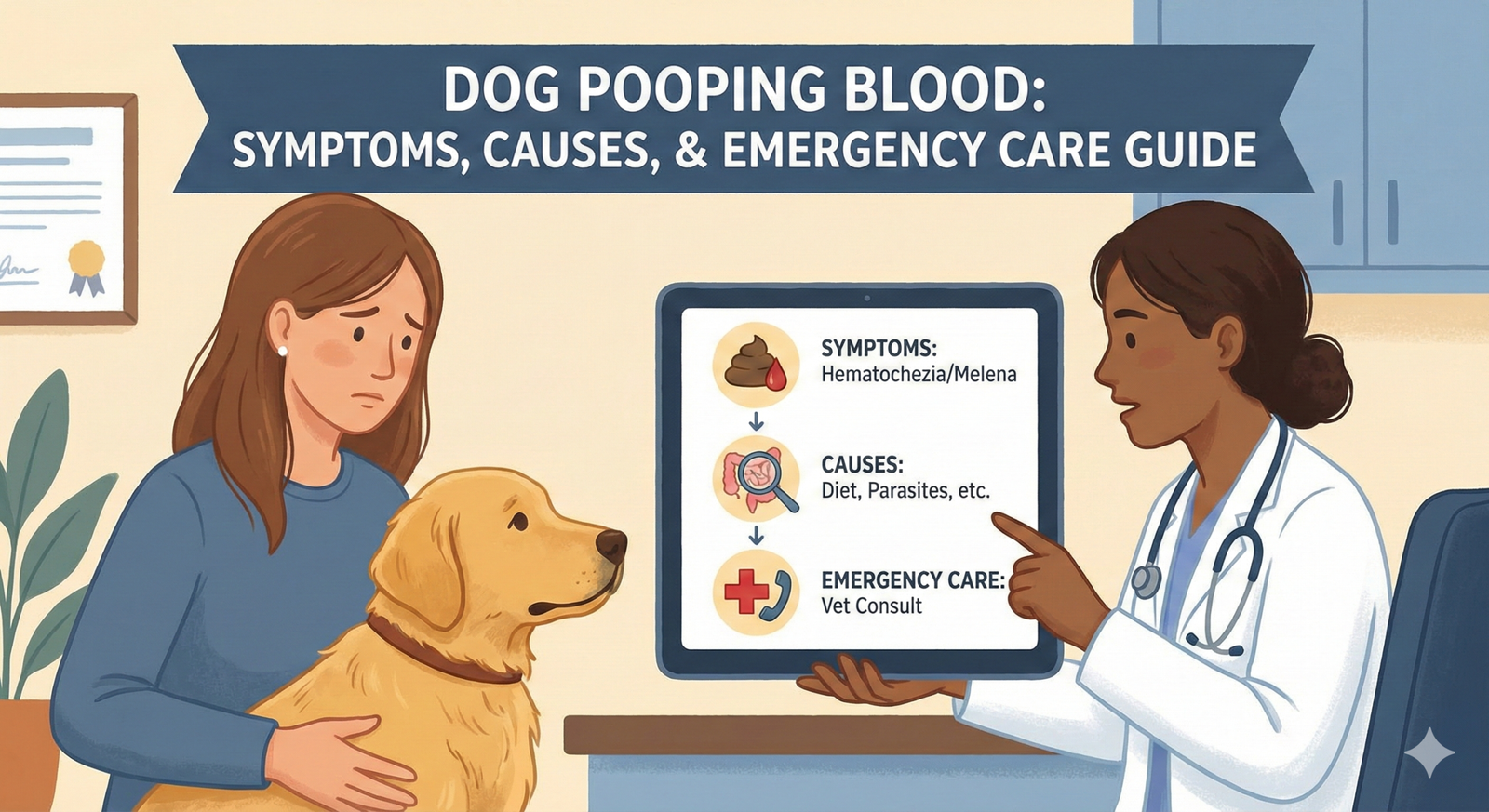
Discovering your dog pooping blood is a heart-stopping moment that sends even the most experienced pet parents into a panic. While it is always a symptom that demands your attention, knowing how to interpret the color, consistency, and accompanying signs can make all the difference in your dog’s recovery. In this comprehensive guide, we strip away the medical jargon to explain the critical differences between bright red streaks and dark, tarry stools.
- 1. Hematochezia vs. Melena: Identifying Blood in Dog Stool for dog pooping blood
- 2. Common Causes of Dog Bloody Stool: From Infections to Irritation for dog pooping blood
- 3. Dog Pooping Blood but Acting Normal: When Is It an Emergency?
- 4. Diagnostic Testing: What Vitals and Samples Your Vet Needs
- 5. FAQ: Your Top Questions About Dog Pooping Blood Answered
We will explore the most frequent culprits—ranging from simple dietary indiscretions and stress colitis to more serious viral infections and internal obstructions. By the end of this article, you will have a clear, expert-backed roadmap to identify “red flag” emergencies, understand essential diagnostic procedures, and gain the peace of mind that comes with knowing exactly when to head to the vet. Protecting your canine companion’s digestive health starts with informed observation, and we are here to ensure you are prepared for every step of the journey.
Quick Navigation: Dog Health Guide
Hematochezia vs. Melena: Identifying Blood in Dog Stool for dog pooping blood
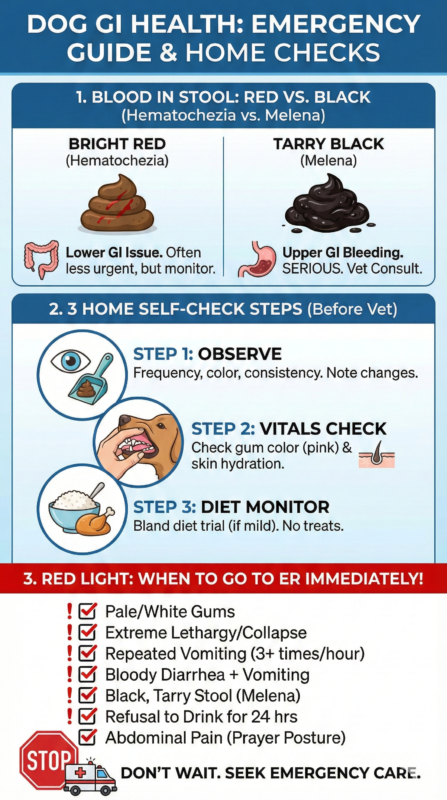
The most critical step in assessing a dog pooping blood episode is identifying the source of the bleeding. In veterinary medicine, clinicians categorize gastrointestinal (GI) bleeding into two distinct types: Hematochezia and Melena. Understanding the visual differences between these two is not just academic; it tells you whether the issue is localized in the lower digestive tract or indicates a more complex, systemic problem in the upper GI system.
1. Decoding Hematochezia: Fresh Bright Red Blood
When you see bright red blood in dog stool, you are likely witnessing hematochezia. This occurs when blood originates from the lower gastrointestinal tract, specifically the colon or rectum. Because the blood has not been processed by digestive enzymes, it retains its vivid red color.
1.1. Visual Characteristics: You may notice distinct streaks of red on the surface of the stool, or the entire movement may appear wrapped in a bloody, mucus-like film.
1.2. Common Lower GI Triggers:
Colitis: Inflammation of the colon, often triggered by stress or sudden diet changes.
Anal Gland Issues: Irritation or abscesses near the rectum can leave fresh blood on the stool as it passes.
Physical Trauma: Ingesting sharp objects (like bone fragments) that scrape the lining of the colon.
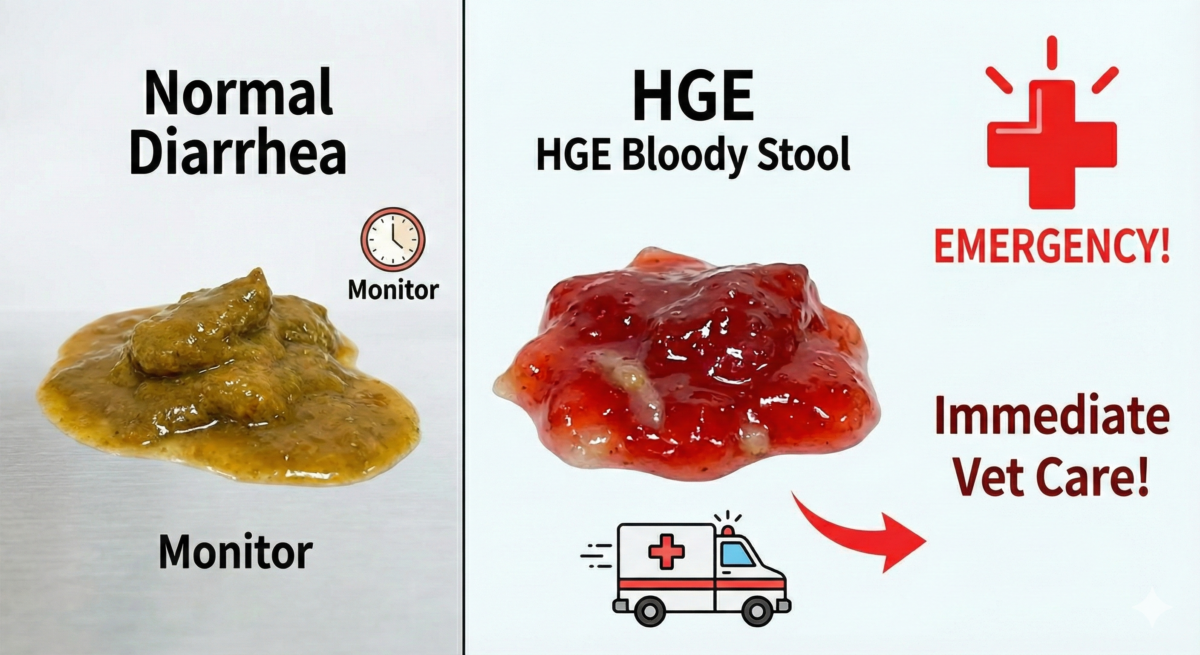
1.3. The “Jelly” Phenomenon: If the stool looks like raspberry jam or jelly, this is a hallmark sign of Hemorrhagic Gastroenteritis (HGE). In these cases, the loss of fluid and blood is so rapid that the dog requires immediate stabilization.

2. Recognizing Melena: Dark, Tarry, and Digested Blood
Melena is often more subtle and dangerous than fresh blood. It represents blood that has originated in the upper GI tract—the stomach or the small intestine—and has been partially digested by stomach acid.
2.1. Visual Characteristics: Melena does not look like “blood” in the traditional sense. Instead, it appears as a dark, black, and exceptionally sticky or tarry substance. Owners often mistake it for a simple dark-colored stool caused by a new protein source. 2.2. The “Coffee Ground” Appearance: If your dog also vomits and the contents look like old coffee grounds, this confirms active bleeding in the stomach.
2.3. Clinical Significance: Melena is frequently associated with severe internal conditions:
Stomach Ulcers: Often caused by the long-term use of NSAIDs or metabolic diseases like kidney failure.
Internal Tumors: Bleeding masses in the upper intestine.
Toxin Ingestion: Certain poisons can trigger massive internal hemorrhaging.
3. Case Study: The Danger of “Acting Normal”
Clinical data suggests that nearly 35% of dogs with early-stage melena do not exhibit signs of pain or lethargy until significant blood loss has occurred.
Example Case: A 5-year-old Golden Retriever was brought into a clinic with “sticky black stool” but was still eating and playing. Blood work revealed a dangerously low red blood cell count. The cause was an undiagnosed ulcer triggered by accidental ingestion of a human pain reliever.
The Lesson: Never wait for your dog to “look sick.” The presence of blood in dog stool, regardless of the color, is your primary early warning system.
4. Key Differences at a Glance
| Feature | Hematochezia | Melena |
| Color | Bright Red (Fresh) | Black / Tarry (Digested) |
| Origin | Lower GI (Colon/Rectum) | Upper GI (Stomach/Small Intestine) |
| Texture | Often streaks or mucus | Sticky, thick, and oily |
| Urgency | Urgent (Monitor for frequency) | Emergency (Immediate vet visit) |
For more details on stabilizing your pet’s stomach after an episode, see our comprehensive guide on Dog Diarrhea Treatment.
Common Causes of Dog Bloody Stool: From Infections to Irritation for dog pooping blood
Determining the underlying cause of dog bloody stool is essential for a successful recovery plan. Gastrointestinal bleeding is rarely a disease in itself; rather, it is a clinical manifestation of an internal disruption that can range from a minor stomach upset to a life-threatening systemic crisis. Below, we examine the primary triggers that vets look for when a dog presents with blood in their waste.
1. Dietary Indiscretion and Abrupt Changes
The most frequent cause of lower GI bleeding is what veterinarians call “dietary indiscretion,” colloquially known as “garbage gut.” Dogs are natural scavengers, and their curiosity often leads them to consume items that irritate the delicate mucosal lining of the intestines.
Foreign Objects: Ingesting bones, sticks, or plastic fragments can cause physical abrasions. If a shard of bone scrapes the lining of the colon, you will see bright red streaks of blood.
Toxic Foods: Foods that are high in fat or contain ingredients like onions or garlic can trigger acute pancreatitis or severe gastroenteritis, both of which may result in bloody movements.
Sudden Diet Transitions: Shifting from one brand of kibble to another without a transition period can shock the gut microbiome, leading to inflammation and transient bleeding.
2. Intestinal Parasites and Viral Infections
Infections are a leading cause of dog bloody stool, particularly in puppies or dogs with compromised immune systems.
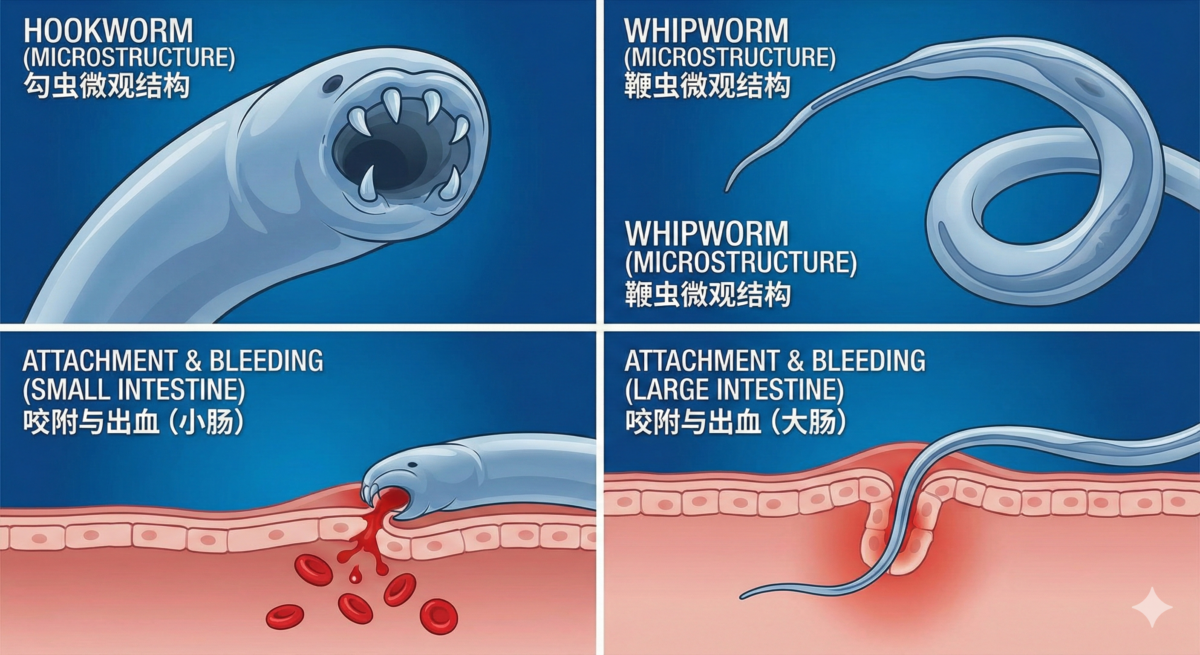
Hookworms and Whipworms: These parasites attach themselves to the intestinal wall and feed on the dog’s blood. A heavy infestation often results in dark, tarry stools or fresh red blood mixed with mucus.
Parvovirus: This is the most feared cause of bloody diarrhea in puppies. The virus attacks the rapidly dividing cells of the GI tract, causing the intestinal lining to slough off. This results in a very distinct, foul-smelling, and heavily bloody discharge.
Giardia: While often causing “cow-pie” consistency stools, Giardia can lead to chronic irritation that produces intermittent blood and mucus.
3. Hemorrhagic Gastroenteritis (HGE) / AHDS
If you observe your dog poop like jelly with blood, it is highly likely they are suffering from Hemorrhagic Gastroenteritis, now more commonly referred to as Acute Hemorrhagic Diarrhea Syndrome (AHDS).
The Symptoms: AHDS is characterized by the sudden onset of massive amounts of bloody diarrhea that looks exactly like strawberry jam or raspberry jelly.
The Risk: This condition causes a rapid shift of fluid into the intestines, leading to severe dehydration and a dangerous increase in red blood cell concentration (PCV).
Case Example: A healthy 12-pound Miniature Poodle began vomiting and passing “jelly blood” within a 4-hour window. Without immediate IV fluid therapy, AHDS can lead to hypovolemic shock and death within 24 hours.
4. Toxicity and Internal Injuries
Environmental hazards play a significant role in acute GI bleeding cases.
Rat Poison (Anticoagulants): Many rodenticides work by preventing blood from clotting. If a dog ingests this, they will bleed internally, often showing up as melena (black stool) or hematochezia (red blood), along with bleeding from the gums or nose.
NSAID Toxicity: Human pain relievers like Ibuprofen or Naproxen are highly toxic to dogs. They cause rapid gastric ulceration, which manifests as dark, “coffee ground” vomit and tarry, black stools.
Stress Colitis: High-stress events, such as boarding or moving house, can trigger an inflammatory response in the colon, leading to a temporary appearance of blood and mucus.
5. Statistical Overview of Causes
According to clinical studies, the distribution of causes for acute bloody stool in adult dogs is approximately:
Dietary Indiscretion: 45%
Parasitic Infections: 20%
Stress/Inflammatory Colitis: 15%
HGE/AHDS: 10%
Toxicity/Other: 10%
If you suspect a simple dietary upset is the cause, check out our guide on What to Feed a Dog with Diarrhea for the safest bland diet recipes.
Dog Pooping Blood but Acting Normal: When Is It an Emergency?
One of the most confusing scenarios for a pet parent is seeing a dog pooping blood but acting normal. You might observe a streak of bright red in the grass, yet your dog is still wagging their tail, begging for treats, and sprinting around the yard. This clinical paradox often leads owners to delay treatment, assuming the issue is a one-time fluke. However, in the world of canine health, behavioral normalcy does not always equate to internal stability.
1. Assessing the “Acting Normal” Paradox
Dogs are evolutionary masters at masking pain. By the time a dog shows visible lethargy or weakness, an internal condition has often progressed to a critical stage.
1.1. Early-Stage Inflammation: Conditions like mild stress colitis or dietary indiscretion may cause the intestinal lining to shed blood before the dog feels systemic “sickness.”
1.2. The Adrenaline Mask: In some cases, the excitement of being outside or playing can temporarily mask the discomfort of a minor GI bleed.
1.3. Small vs. Large Volume: A single drop of blood in dog stool while acting normal is often a sign of localized irritation in the rectum, whereas consistent bleeding—even without lethargy—suggests a deeper pathology.
2. Single Episode vs. Recurrent Bleeding
Frequency is your most reliable diagnostic tool when your dog appears fine.
The One-Off Incident: If you see a tiny amount of red blood once, and the next three bowel movements are perfectly normal, it may have been a minor scratch from a dry kibble or a transient “garbage gut” moment.
The Recurrent Pattern: If the blood persists for more than two consecutive movements, or if you see dog pooping blood and mucus repeatedly over 24 hours, the “acting normal” phase is likely about to end.
Volume Matters: Regardless of behavior, if the stool consists of more than 20% blood, it is a clinical emergency. Rapid blood loss can lead to hypovolemic shock before behavioral symptoms manifest.
3. Vitals Check: The “Home Triage” Protocol
If your dog is pooping blood, perform this 2-minute “Home Triage” to decide if you can wait until morning or need an emergency vet.
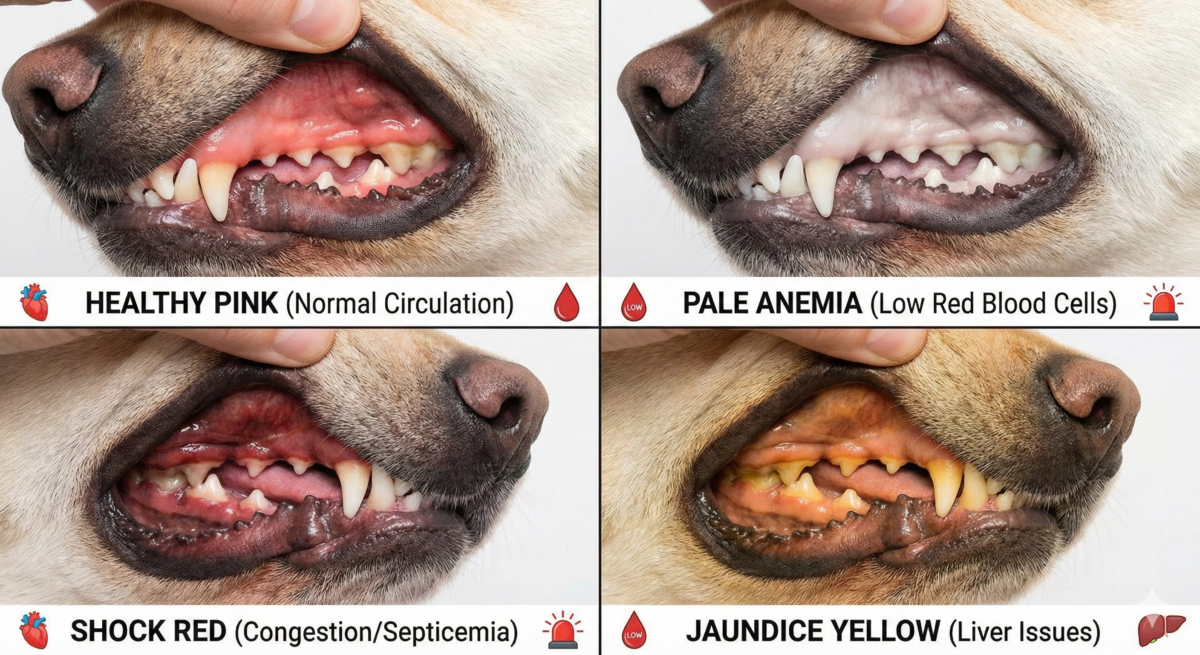
3.1. Check the Gums (The Color Test): Lift your dog’s lip. Gums should be “bubblegum pink” and moist.
Emergency: If gums are pale, white, or blue, your dog is losing blood or in shock. Go to the vet immediately.
3.2. Capillary Refill Time (CRT): Press your finger firmly on the gum for two seconds, then release.
Normal: The white spot should turn pink again in under 2 seconds.
Emergency: If it takes longer than 2 seconds, circulation is compromised.
3.3. Hydration Status: Gently pinch the skin between the shoulder blades and let go.
Normal: It should snap back instantly.
Concern: If it stays “tented” or moves slowly, your dog is dehydrated.
4. Case Study: The Danger of the “Wait and See” Approach
A 3-year-old Beagle was brought into an emergency clinic after pooping blood for two days. The owner noted the dog was “acting totally normal” until an hour before arrival, when the dog suddenly collapsed.
Diagnosis: The dog had an undiagnosed hookworm infestation. While the dog felt fine initially, the cumulative blood loss eventually reached a tipping point where the body could no longer compensate.
Outcome: The dog required an emergency blood transfusion costing over $1,500. Had the owner acted when the first bloody stool appeared, a simple $20 dewormer would have solved the issue.
5. When “Acting Normal” is Still an Emergency
Even if your dog is playing, seek immediate help if you observe:
Melena: Black, tarry stools always indicate a serious upper GI bleed.
Profuse Bleeding: Stools that are more blood than fecal matter.
Known Toxin Ingestion: If you suspect they ate rat poison or human meds.
Age Factors: Puppies and seniors can decline in health much faster than adult dogs.
Diagnostic Testing: What Vitals and Samples Your Vet Needs for dog pooping blood
When you arrive at the clinic because your dog is pooping blood, the diagnostic process begins the moment you walk through the door. Because gastrointestinal bleeding is a clinical sign rather than a singular disease, your veterinarian must act as a medical detective to find the primary source of the hemorrhage. Understanding these tests helps you prepare for the visit and ensures your dog gets the fastest, most accurate treatment possible.
1. The Power of the Fecal Exam: Bring a Sample
The most vital tool in diagnosing why a dog is pooping blood is a fresh fecal sample. If possible, collect a sample from the last 12 hours before your appointment and keep it in a clean, sealed container.
1.1. Fecal Flotation: This test identifies the microscopic eggs of intestinal parasites like hookworms and whipworms. These parasites are a leading cause of dog bloody stool, especially in rescue dogs or those with access to outdoor communal areas. 1.2. Fecal Smear: A technician looks for abnormal bacterial overgrowth, such as Clostridium or Campylobacter, which can trigger inflammatory responses leading to bleeding. 1.3. Parvo Testing: For puppies or unvaccinated adults, an Enzyme-Linked Immunosorbent Assay (ELISA) test is used to rapidly detect the Parvovirus antigen. This is a life-or-death diagnostic step for any puppy pooping blood.
2. Blood Panels: Assessing Internal Impact
While fecal tests look for the cause, blood work evaluates how the bleeding has affected your dog’s overall physiological stability.
2.1. Complete Blood Count (CBC): This is the most crucial blood test.
Anemia Check: It measures the red blood cell count. If the count is low, it indicates significant blood loss, even if the dog is “acting normal.”
Infection Check: High white blood cell counts signal a systemic infection or severe inflammation. 2.2. Chemistry Panel: This evaluates organ function. For instance, high BUN (Blood Urea Nitrogen) levels can sometimes indicate that a dog is digesting blood from an upper GI bleed (Melena). 2.3. Coagulation Profiles: If your dog is bleeding from multiple sites (like the gums or nose) as well as the stool, the vet will test their ability to clot. This is essential for diagnosing rat poison ingestion or clotting disorders.
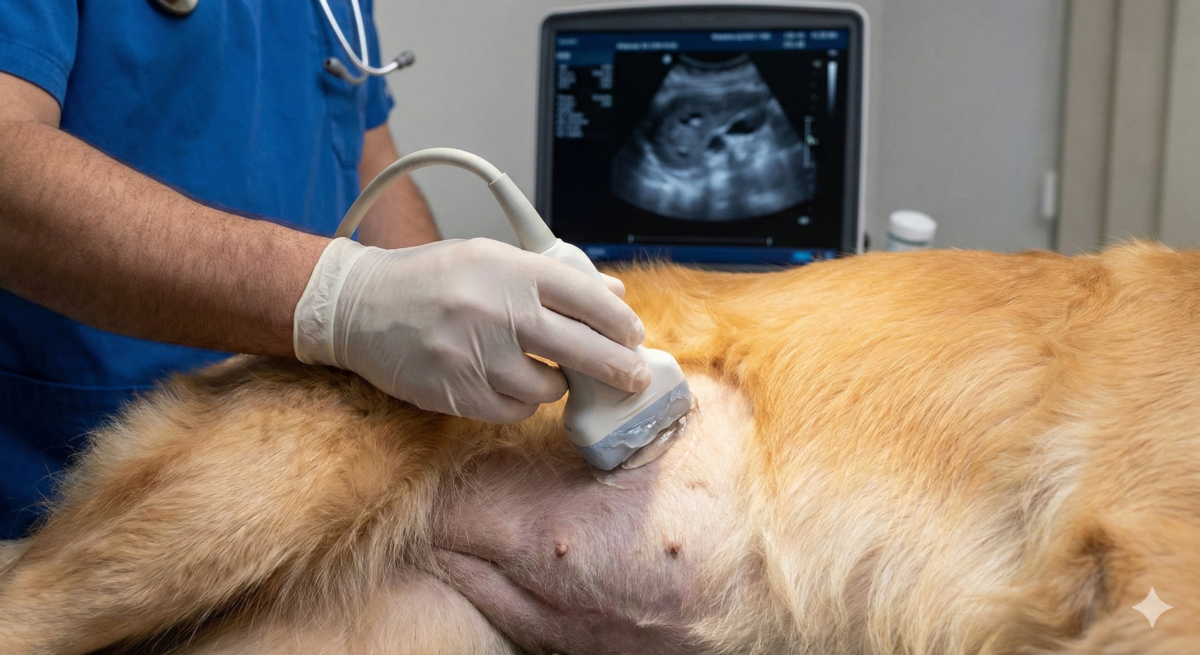
3. Imaging: Looking for Hidden Obstructions
If the cause isn’t found in the stool or blood, the veterinarian will need a “window” into the abdomen to check for physical trauma or masses.
3.1. Abdominal X-rays (Radiographs): These are used to identify foreign objects (like stones, metal, or bone shards) that might be tearing the intestinal lining. They also show “gas patterns” that suggest a bowel obstruction. 3.2. Ultrasound: An ultrasound is far more sensitive for evaluating the “architecture” of the intestinal wall. It can detect thickening of the gut lining, which is common in Inflammatory Bowel Disease (IBD) or certain types of GI cancers.
4. Stabilization: Prioritizing Life Over Diagnosis
In severe cases, such as Hemorrhagic Gastroenteritis (HGE), the vet may skip certain tests initially to prioritize stabilization.
Fluid Therapy: Intravenous (IV) fluids are the “gold standard” for treating any dog with significant bloody diarrhea. This restores blood pressure and prevents organ failure from dehydration.
Injectable Medications: Anti-nausea drugs and gastro-protectants are often administered to stop further irritation of the stomach lining.
Case Example: A 20-lb Beagle was admitted with profuse bright red blood in dog stool. The vet immediately started IV fluids while waiting for blood results. This quick action prevented the dog from going into hypovolemic shock, despite a 15% drop in red blood cells.
5. Owner’s Prep Checklist for the Vet Visit
To help your vet work faster, have the following information ready:
The Timeline: Exactly when did the bleeding start?
Dietary History: Did the dog get into the trash or eat a new treat recently?
Medication Log: Are they on any NSAIDs or flea/tick preventatives?
The Evidence: Take a high-quality photo of the stool if you couldn’t bring a sample.
Internal Link Suggestion: While waiting for test results, learn about the recovery process and Best Dog Diarrhea Medicine used in hospital settings
FAQ: Your Top Questions About Dog Pooping Blood Answered
When your dog is pooping blood, several common questions inevitably arise. We have compiled these answers to address the most frequent concerns of pet owners and provide quick, actionable insights.
1. Can stress cause blood in my dog’s stool?
Yes, emotional or environmental stress is a common trigger for a condition known as stress colitis. When a dog is stressed (due to boarding, moving, or loud noises), their colon can become inflamed, leading to the shedding of mucus and bright red blood. While typically not a long-term threat, persistent stress-induced bleeding should still be evaluated to rule out secondary infections.
2. What should I feed a dog that is pooping blood?
If your vet advises home care, the “Golden Standard” is a bland diet. This usually consists of a 2:1 ratio of boiled white rice to lean protein, such as skinless, boneless boiled chicken or extra-lean ground turkey. Avoid adding any oils, salts, or spices. This diet minimizes work for the digestive tract while providing necessary calories for recovery.
3. How long can a dog go with bloody diarrhea?
The “Wait and See” window for dog bloody stool is very narrow. For a healthy adult dog acting normally, you might monitor them for 12 to 24 hours. However, if the bleeding is profuse, or if your dog is a puppy or senior, you should not wait. Prolonged bloody diarrhea leads to rapid electrolyte depletion and life-threatening dehydration.
4. Is one drop of blood in dog stool a crisis?
A single, isolated drop of bright red blood on an otherwise normal, firm stool is rarely a crisis—it often indicates a minor rectal irritation or a small scratch. However, if that “one drop” becomes a consistent feature or is accompanied by a change in stool consistency, it is time for a professional check-up.
Conclusion: Prioritizing Your Pet’s Digestive Safety
Successfully managing an episode of a dog pooping blood requires a balanced approach of calm observation and decisive action. By understanding the critical differences between hematochezia (fresh red blood) and melena (dark, digested blood), you are already ahead of the curve in protecting your pet’s health.
Remember, while home remedies like a bland diet and probiotics can support recovery in minor cases, they are never a substitute for a professional diagnosis—especially when red flags like lethargy, vomiting, or pale gums appear. Your vigilance is the most powerful tool in your dog’s medical arsenal. Stay informed, monitor their vitals closely, and always prioritize safety over convenience.
Take Control of Your Dog’s Health Today
Don’t wait for an emergency to start tracking your pet’s wellness. Download our Free Daily Dog Health Checklist to keep a detailed log of your dog’s vitals, stool consistency, and symptoms. Being prepared is the best way to ensure your furry friend lives a long, healthy, and happy life.
References
US Food and Drug Administration. “Human User Safety in New and Abbreviated New Animal Drug Applications (CVM GFI #278).” June 2024.
US Food and Drug Administration. “Target Animal Safety for Veterinary Pharmaceutical Products (CVM GFI #185 / VICH GL43).” April 2009.
US Food and Drug Administration. “Public Warning and Notification of Recalls Under 21 CFR Part 7, Subpart C (Guidance for Industry and FDA Staff).” February 2019.
Digestive issues in dogs can be serious. Read our comprehensive guide about My Dog Is Throwing Up: Causes, Home Remedies and Vet Guide for more information.
Conclusion
Taking proactive steps to address your dog’s health and behavior concerns is the best way to ensure they live a happy, comfortable life. By staying informed and working closely with your veterinarian when needed, you can provide the care your furry companion deserves. Remember that early intervention often leads to better outcomes and can prevent minor issues from developing into more serious conditions.